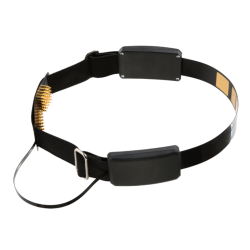
BrainAccess HALO is a lightweight, wireless headband for recording EEG signals—electroencephalography (EEG), or electrical activity of the brain measured using electrodes placed on the scalp. The device features four measurement channels, integrated dry electrodes, an amplifier, a rechargeable battery, and a Bluetooth communication module. It does not require a separate EEG cap, electrode wires, or an external amplifier.
BrainAccess HALO — Product Description
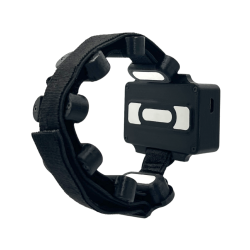
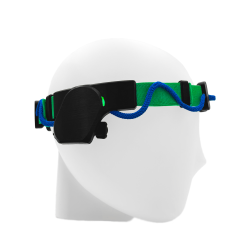
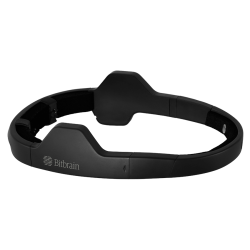
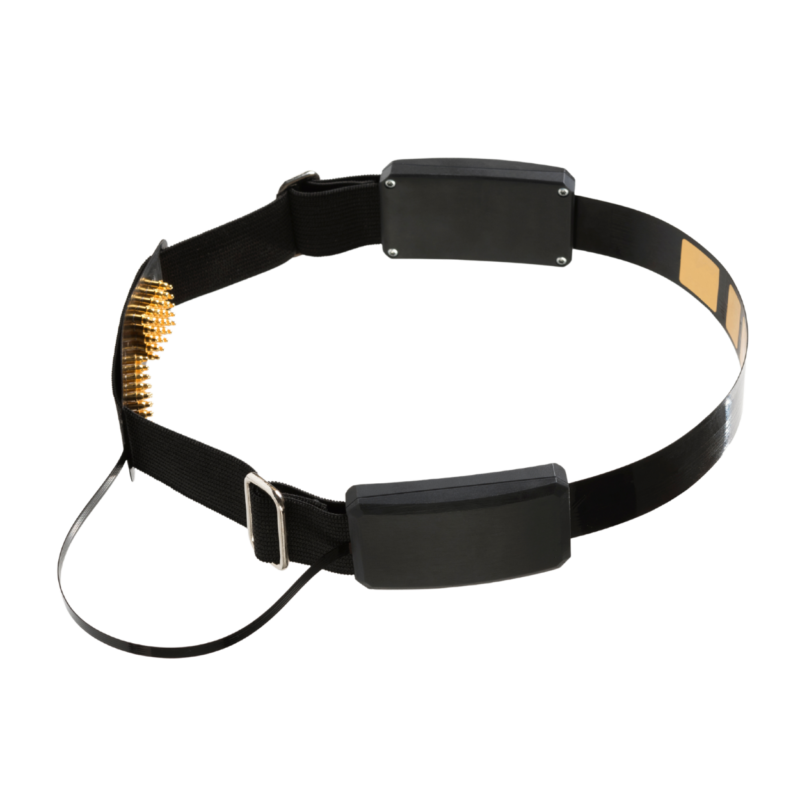
BrainAccess HALO is a lightweight, wireless headband for recording EEG signals—electroencephalography (EEG), or electrical activity of the brain measured using electrodes placed on the scalp. The device features four measurement channels, integrated dry electrodes, an amplifier, a rechargeable battery, and a Bluetooth communication module. It does not require a separate EEG cap, electrode wires, or an external amplifier.
The measurement channels are arranged according to the international 10–20 EEG system:
Fp1 and Fp2—frontal regions,
O1 and O2—occipital regions,
Additionally, a common reference electrode is used at the front of the headband, as well as bias electrodes to reduce common-mode interference.
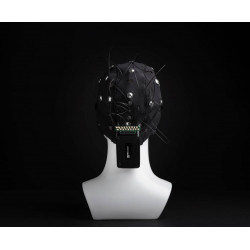
The front electrodes are flat, gold-plated surfaces that contact the forehead. The rear electrodes use gold-plated, spring-loaded pins to ensure contact with the skin through the hair. The design is adjustable and designed for head circumferences from 53 to 58 cm.
HALO is primarily intended for:
mobile and educational EEG experiments,
BCI prototyping (Brain-Computer Interface) systems,
stimulus response studies,
SSVEP and P300 experiments,
human-computer interaction projects,
wellness applications, and non-clinical EEG demonstrations.
The device is not a medical device and is not intended or certified for the diagnosis, treatment, cure, or prevention of disease.
Technical Specifications
EEG Recording
Number of EEG Channels: 4
Measurement Electrodes: Fp1, Fp2, O1, O2
Reference System: Common Reference Channel
Electrode Type: Dry Contact Electrodes
Anterior Electrodes: Flat, Gold-Plated
Rear Electrodes: Gold-Plated Spring Electrodes with Pins
Sampling Rate: 250 or 500 Hz
Input Transducer Resolution: 24-bit
Analog Gain: According to the extended manual 1, 2, 4, 6, 8, 12, or 24.
A 250 Hz rate means that each channel is read 250 times per second, while 500 Hz means 500 times per second. A higher sampling rate provides greater temporal resolution but reduces battery life.
Connectivity
Standard: Bluetooth 4.2 BLE
BLE stands for Bluetooth Low Energy, an energy-efficient version of Bluetooth.
Declared range: up to 15 meters with the included USB Bluetooth adapter.
Can be used with a compatible, built-in Bluetooth module on your computer.
However, the manufacturer recommends using the included adapter, as not all built-in Bluetooth modules ensure proper EEG data streaming.
Battery and power supply
Battery type: Lithium-polymer, Li-Po
Capacity: 400 mAh
Operating time at 250 Hz: up to 7 hours
Operating time at 500 Hz: up to 5 hours
Charging time: approximately 2 hours
Charging port: USB-C
Power supply required: 5 V, minimum 1 A
The device cannot be used while charging.
Dimensions and Design
Weight: 70 g
Adjustable circumference: 53–58 cm
Adjustable rear electrode position
Integrated amplifier and battery
Single power button
LED status indicators for device, Bluetooth connection, charging, and low battery.
AC adapter not included.
Software Required for Operation
1. BrainAccess Board
The basic software for operating the device on a computer is BrainAccess Board. The application allows:
detecting and connecting the device via Bluetooth,
viewing EEG signals in real time,
recording data,
monitoring electrode contact quality,
analyzing the frequency spectrum,
adding event markers,
conducting SSVEP and P300 experiments,
converting recordings to formats such as CSV, FIF, SET, and BIDS,
transmitting data via LSL (Lab Streaming Layer).
LSL is a mechanism for transmitting and synchronizing data from various devices, such as EEG, physiological sensors, and stimulus-presenting applications.
BrainAccess Board Requirements:
Windows 10 or later or Ubuntu 22.04 or later,
approximately 500 MB of free disk space,
a compatible Bluetooth module or the included USB Bluetooth adapter.
According to the current documentation, macOS support is still being planned. The manufacturer also indicates that HALO is not currently compatible with iOS devices.
2. BrainAccess Mobile App
For simple, mobile data recording, you can use the BrainAccess Mobile App:
System: Android 9.0 or later,
Connect directly to the wristband,
Record data locally on a smartphone or tablet,
Possibility of further data transfer via Wi-Fi.
3. BrainAccess SDK
For developers and integrators, the manufacturer provides the BrainAccess SDK – Software Development Kit, a set of libraries and programming interfaces.
The SDK enables:
device control,
selection of measurement channels and parameters,
receiving raw EEG data,
monitoring device status,
access to buffers and markers,
real-time data processing,
creating custom BCI applications,
using ready-made components related to SSVEP and P300.
C and Python interfaces are available. The package is primarily intended for research teams, programmers, and custom application developers.
Hardware Requirements
For computer use:
A computer with Windows 10 or later or Ubuntu 22.04 or later,
A minimum of approximately 500 MB of free space for the BrainAccess Board software,
A free USB port for the included Bluetooth adapter,
Optionally a compatible built-in Bluetooth module,
A USB port or 5V USB power supply for charging the device,
A minimum 5V/1A power supply recommended,
User head circumference within the range of 53–58 cm.
The manufacturer warns that some computer USB ports may not provide sufficient current for proper charging. In practice, a standard USB power supply with adequate current output is a safer solution.
For mobile use,
a smartphone or tablet with Android 9.0 or later,
Bluetooth,
Wi-Fi if data needs to be transferred to another program or computer,
BrainAccess Mobile App.
BrainAccess HALO is a lightweight, wireless headband for recording EEG signals—electroencephalography (EEG), or electrical activity of the brain measured using electrodes placed on the scalp. The device features four measurement channels, integrated dry electrodes, an amplifier, a rechargeable battery, and a Bluetooth communication module. It does not require a separate EEG cap, electrode wires, or an external amplifier.