- New
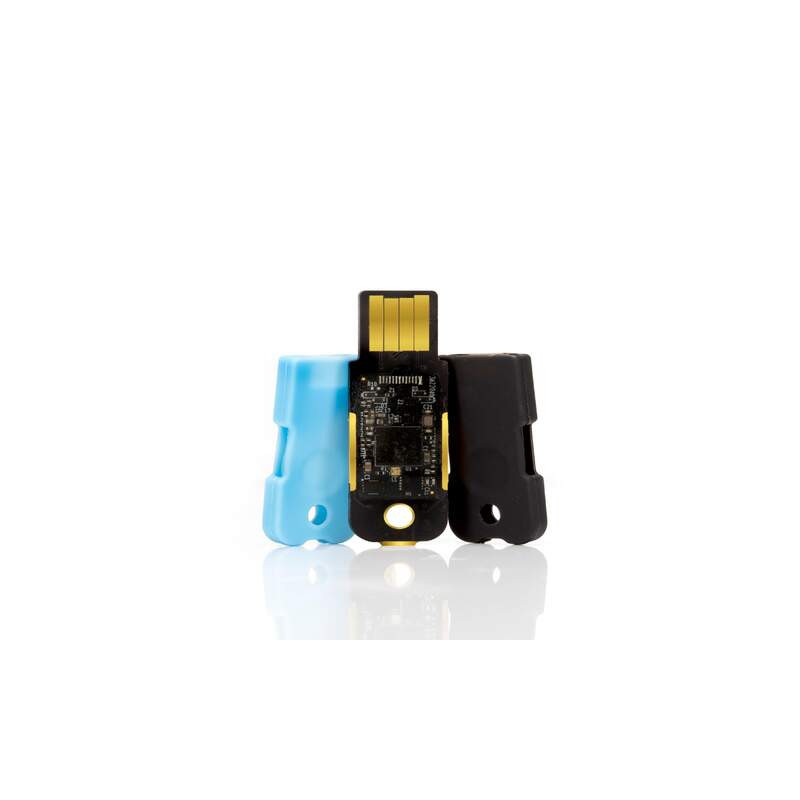
SoloKeys is a family of open-source hardware security keys designed to protect online accounts against phishing, account takeovers, and unauthorized access. SoloKeys keys utilize the FIDO2, WebAuthn, and FIDO U2F standards, enabling both two-factor authentication (2FA) and passwordless login using passkeys.
SoloKeys – Open FIDO2 Hardware Security Keys
SoloKeys is a family of open-source hardware security keys designed to protect online accounts against phishing, account takeovers, and unauthorized access. SoloKeys keys utilize the FIDO2, WebAuthn, and FIDO U2F standards, enabling both two-factor authentication (2FA) and passwordless login using passkeys.
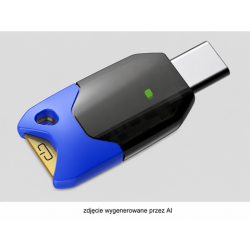
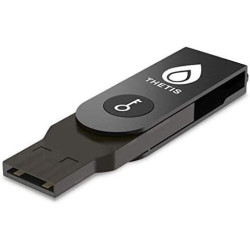
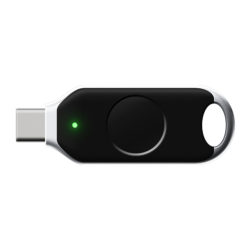
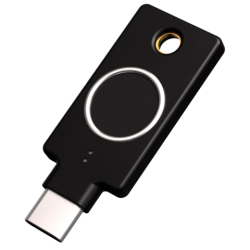
The core product family is the Solo 2, available with a USB-A or USB-C connector and—in the Solo 2+ models—additionally with NFC. Thanks to NFC, the key can also be used for authentication on compatible mobile devices.
SoloKeys is distinguished by its completely open architecture. The hardware design, firmware, and software tools are available as open source, allowing for analysis, auditing, and independent verification. The Solo 2 firmware was built using the open Trussed® cryptographic framework.
Keys intended for general users and enterprises are offered as Solo 2 Secure. Solo 2 Hacker versions utilize the same hardware platform but allow users to install their own firmware and are primarily intended for programmers, security researchers, and hardware developers.
Key Applications
Two-factor authentication (2FA),
Multi-factor authentication (MFA),
Passwordless login,
Passkeys,
Account protection against phishing,
Account takeover protection,
FIDO2,
WebAuthn,
FIDO U2F,
CTAP2,
User authentication via physical confirmation on a key,
Securing Google accounts,
Securing Microsoft accounts,
Securing GitHub,
Securing Dropbox,
Securing Salesforce,
Securing Facebook,
Securing other services that support FIDO2, WebAuthn, or U2F,
PIV – Personal Identity Verification,
OpenPGP,
OATH HOTP/TOTP,
SSH key protection,
Git signing,
Cryptographic applications using hardware-stored keys.
Solo 2 Hacker Variants
The Solo 2 Hacker family is designed for developers, security researchers, and users developing their own firmware.
Available are:
Solo 2 USB-A Hacker,
Solo 2 USB-C Hacker,
Solo 2A+ NFC Hacker,
Solo 2C+ NFC Hacker,
selected Limited Edition versions.
Hacker keys can function like a standard FIDO2 key, but unlike the Solo 2 Secure, they allow users to install their own firmware.
Solo 2 Hacker – Features
Same basic Solo 2 hardware platform,
FIDO2,
WebAuthn,
FIDO U2F,
passkeys,
Ability to install custom firmware,
Ability to run unsigned firmware,
Open bootloader/development environment,
Intended for developers and security researchers,
Ability to experiment with the Trussed® framework,
Ability to create custom FIDO2 applications,
Full access to firmware source code,
No Secure Boot guarantee typical of the Secure version,
No SoloKeys attestation typical of production Secure models.
Hacker versions are not recommended as the primary choice for standard enterprise deployments, where device authentication and firmware validation are required. The Solo 2 Secure variant is appropriate for such applications.
Software Required for Operation
Basic FIDO2 / WebAuthn Use
No additional software or drivers are required for standard use of Solo 2.
The following are required:
A device equipped with a compatible USB or NFC port,
An operating system that supports FIDO2/WebAuthn,
A web browser or app that supports FIDO2/WebAuthn,
An account or service that allows you to register a hardware security key.
After connecting the device, the user registers the key directly in the security settings of the selected service.
Supported Systems
Microsoft Windows,
Apple macOS,
Linux,
ChromeOS,
Android,
xBSD,
iOS – for compatible NFC features on Solo 2+ models.
Supported Browsers
Google Chrome,
Microsoft Edge,
Mozilla Firefox,
Apple Safari,
Brave.
Advanced Management – solo2-cli
For advanced device management, the manufacturer provides the following tool:
solo2-cli
This is a CLI (Command Line Interface) tool, meaning it's operated from the command line.
It enables, among other things:
identifying the connected key,
checking the firmware version,
updating the firmware,
managing the PIN,
resetting the device,
managing FIDO functions,
configuring PIV,
configuring OpenPGP,
supporting OATH functions,
configuring selected device parameters.
For standard FIDO2/WebAuthn authentication, installing solo2-cli is not required.
Solo 2 GUI
The manufacturer is also developing a graphical Solo 2 GUI application designed for simpler key management.
According to the manufacturer's current information, the application is still in development/UAT and should not be presented as standard or final product software at this time. Planned Solo 2 GUI features include:
firmware updates,
passkey management,
PIV management,
OpenPGP management,
PIN configuration,
device settings.
Open Source
Solo 2 is a fully open platform:
Hardware: Open Source,
Firmware: Open Source,
Software tools: Open Source,
Publicly available electronic schematics,
Hardware license: CERN-OHL-S,
Software license: Apache License 2.0 / MIT,
Documentation license: CC BY-SA 4.0.
The open design allows for independent analysis of the code, firmware, and hardware schematics and is one of the key distinguishing features of SoloKeys among proprietary hardware security keys.
Technical Specifications
Brand/Manufacturer: SoloKeys, USA
Device Manufacturing Location: Europe
Product Type: Hardware Security Key / Hardware Authentication Token
Architecture: Open Source Hardware + Open Source Firmware
Solo 2 – Technical Specifications
Device Type: Hardware Security Key,
Authentication Standard: FIDO2,
WebAuthn – Web Authentication Support,
CTAP2 Support,
FIDO U2F / CTAP1 Support,
Passkey Support,
Two-Factor Authentication (2FA),
Passwordless Login Support,
OATH Support,
HOTP Support,
TOTP Support,
PIV Support,
OpenPGP Support,
FIDO2 Algorithms: ES256 / ECDSA P-256 and EdDSA / Ed25519,
FIDO2 Extension Support hmac-secret,
Capacity: approximately 100 stored passkeys,
Processor: NXP LPC55S69,
Processor architecture: ARM Cortex-M33,
Firmware: Trussed® / SoloKeys Open Source Firmware,
Physical confirmation: capacitive touch sensor,
Touch sensor: three contact points,
Wired interface: USB-A or USB-C depending on the model,
Wireless interface: NFC in Solo 2+ versions,
Firmware updateable,
Open source hardware,
Open source firmware,
Open source management tools,
No driver installation required for basic operation,
Windows compatible,
macOS compatible,
Linux compatible,
ChromeOS compatible,
Android compatible,
xBSD compatible,
iOS device support via NFC in Solo 2+ and compatible models applications,
compatible browsers: Google Chrome, Microsoft Edge, Mozilla Firefox, Safari, Brave.
SoloKeys is a family of open-source hardware security keys designed to protect online accounts against phishing, account takeovers, and unauthorized access. SoloKeys keys utilize the FIDO2, WebAuthn, and FIDO U2F standards, enabling both two-factor authentication (2FA) and passwordless login using passkeys.