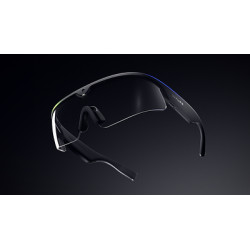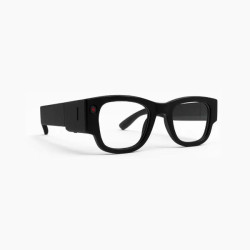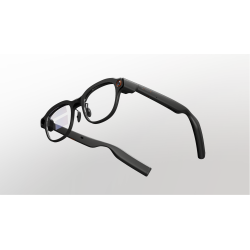
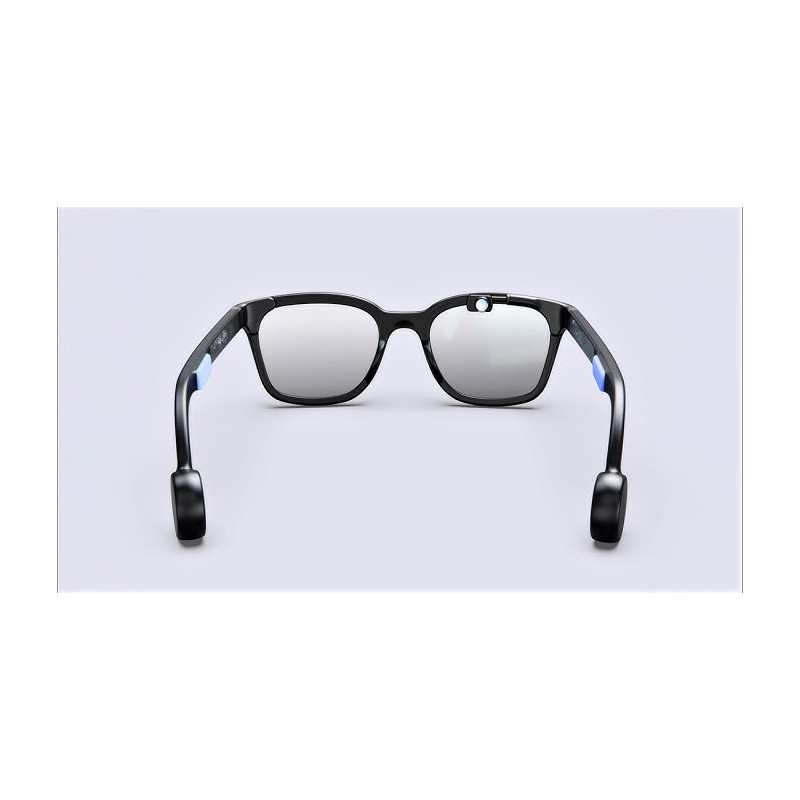
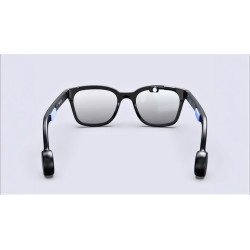
Brilliant Labs Halo is a lightweight, open-source AI (Artificial Intelligence) glasses equipped with a color heads-up display, camera, microphones, and bone conduction speakers. The device is paired with the AI agent Noa, which can analyze ambient image and sound, conduct contextual conversations, translate content, and remember previous user interactions.
Brilliant Labs Halo AI Glasses
Brilliant Labs Halo is a lightweight, open-source AI glasses equipped with a color heads-up display, camera, microphones, and bone conduction speakers. The device is paired with the AI agent Noa, which can analyze ambient image and sound, conduct contextual conversations, translate content, and remember previous user interactions.
Halo is not a full-fledged AR (Augmented Reality) headset that displays rich 3D objects across the entire field of view. Rather, it is a smart glasses platform with a small, color HUD (Head-Up Display) designed to present messages, AI responses, translations, telemetry, and simple applications.
The manufacturer provides open-source software, technical documentation, and an SDK (Software Development Kit), allowing Halo to be used both as a consumer device and as a platform for prototyping AI applications, image recognition, and wearable interfaces.
Specifications
Device type: AI smart glasses with a color head-up display.
Weight: just over 40 g.
Construction: Frame with electronics housed in the temples.
Supported IPD range: 58–72 mm.
Display optics adjustment: +2 to -6 diopters.
Standard lenses: Optical-grade lenses with anti-reflective coating.
Available lens options: prescription and sun protection, ordered through our partner SmartBuyGlasses.
Display: Color OLEDoS [OLED on Silicon].
Display size: 0.2 inches.
Panel resolution: 640 × 480 RGB pixels.
Available interface drawing area: 256 × 256 pixels. Contrast: 10,000:1.
Grayscale: 256.
Maximum declared brightness: up to 5,000 nits.
Panel refresh rate: 25–120 Hz.
The display displays messages and small interface elements within a limited portion of the field of view.
Camera: Color VGA camera with global shutter.
Camera resolution: 640 × 480 pixels.
Horizontal camera field of view: 81.2°.
Camera power consumption at full frequency: approximately 40 mW.
The camera is optimized primarily for image analysis and AI inference, not for capturing high-quality photos and videos.
Processor: Alif Semiconductor Balletto B1.
CPU: 32-bit Arm Cortex-M55.
NPU [Neural Processing Unit]: Arm Ethos-U55. MRAM: 1.8 MB.
SRAM: 2.0 MB.
Processor: Manages the device, sensors, Bluetooth communication, and local low-power AI functions.
Microphones: Two digital MEMS microphones.
Audio Activity Detection (AAD).
Supported recording formats: PCM and LC3.
Speakers: Two stereo speakers using bone conduction.
Open-ear audio design – the user's ears remain uncovered.
Supported playback formats: PCM and LC3.
Motion sensor: Three-axis accelerometer.
Accelerometer range: Configurable ±2 g, ±4 g, ±8 g, or ±16 g.
Supports single-, double-, and triple-tap detection.
Magnetometer: Three-axis electronic compass. The manufacturer describes the sensors collectively as a six-axis IMU (Inertial Measurement Unit).
Position and head movement detection are available.
Connectivity: Bluetooth Low Energy 5.3.
Connection to smartphone or computer: via Bluetooth LE.
Device operating system: Zephyr OS.
Scripting environment: Lua 5.3 virtual machine.
Firmware updates: Over-the-Air (OTA).
The glasses do not have a traditional app installation menu or standalone app store – most of the logic runs in the host app on the phone or computer.
Battery: Built-in 300 mAh lithium-ion battery.
Battery design: Two 150 mAh cells.
Claimed operating time: Up to approximately 14 hours or a full day with typical use.
Claimed battery life: Over 1000 charging cycles.
Charging temperature range: 0°C to +45°C. Charging: Magnetic charging connector that connects to USB-C.
Controls: Physical button under the left earcup.
Button functions: Power on, off, pairing, and programmable functions.
Supported events: Single, double, and long button presses, as well as accelerometer-detected taps.
Software and design: Open source platform.
Available development environments: Python, Flutter, and Web Bluetooth.
Supported systems for the Python SDK: Windows, macOS, and Linux.
Supported Flutter mobile platforms: Android and iOS.
Web Bluetooth: Supported by compatible Chromium browsers on computers and Android devices.
Advanced device control: Lua and direct Bluetooth LE interface.
Software Required for Operation
Standard Use
Smartphone with Android or iOS.
Bluetooth Low Energy enabled.
Brilliant Noa mobile app.
A Brilliant Labs account and access to services, if required by Noa features.
Internet connection for features using the cloud-based AI agent.
The Noa app is responsible for connecting to the glasses, processing data, displaying responses, and performing firmware updates.
Brilliant Noa app - coming soon for the Apple App Store and Google Play Store.
Creating Your Own Apps
Brilliant SDK for Python.
Brilliant SDK for Flutter.
Brilliant SDK for Web Bluetooth and TypeScript.
Optional Lua 5.3 for creating scripts that execute directly on the device.
Development environment appropriate for the chosen platform, e.g., Python, Flutter, or a web application using Web Bluetooth.
Computer or mobile device with Bluetooth LE support.
The device can interface with its own host applications. Halo typically operates as a peripheral device, while the main processing and application logic is performed on the smartphone or computer.
Key Features
Conversations with the AI agent Noa.
Analyzing images seen through the camera.
Analyzing user audio and speech.
Displaying short information directly in the field of view.
Playing responses through bone conduction speakers.
Translating between multiple languages.
Remembering previous conversations, observations, and user context.
Creating simple experiences and Miniapps using natural language.
Creating custom apps using the camera, microphones, speakers, display, and motion sensors.
Research applications in the areas of computer vision, AI, wearable devices, and AR interfaces.
Advantages
Lightweight – just over 40g, making the device significantly lighter than typical AR or VR headsets.
A color display allows for visual presentation of AI responses, messages, and simple interfaces.
Built-in camera, dual microphones, and stereo bone conduction speakers.
Declared operating time: up to 14 hours.
A dedicated neural processing unit (NPU) allows for some AI operations to be executed locally with low power consumption.
Open hardware and software design.
SDKs available for Python, Flutter, and Web Bluetooth.
Ability to create your own apps and modify device behavior.
Support for prescription and sunglass lenses.
Adjustable display optics from +2 to -6 diopters.
Global camera shutter reduces image distortion during movement.
Open audio design allows you to hear ambient sounds while using the device.
Disadvantages and Limitations
The camera has a resolution of only 640 x 480 pixels, so it's primarily intended for AI image analysis, not for capturing high-quality photos or videos.
The usable area of the display interface is 256 x 256 pixels, limiting the amount of information that can be comfortably displayed.
It's not a full-fledged AR headset with a wide field of view and spatial 3D objects.
Most apps require a smartphone or computer as a host device.
Halo doesn't have a traditional system for installing and launching apps directly from the glasses.
Noa's cloud-based AI features require internet access.
The stated battery life is based on estimated or typical use; intensive use of the camera, display, microphones, and audio transmission may reduce this time.
The IPD range of 58–72 mm means the glasses won't be a perfect fit for everyone.
The manufacturer doesn't provide an IP rating for water and dust resistance on the official website.
Currently, only one color is available on the website. Prescription lenses require a separate order.
Additional taxes, VAT, customs clearance fees, and carrier charges may apply when purchasing from outside the manufacturer's country.
The camera, microphones, and long-term contextual recognition feature require careful consideration of the privacy of the user and those around them.
The manufacturer warns that the device may partially obscure the field of vision, causing eye strain, headaches, or motion sickness.
The glasses should not be worn while driving or operating hazardous machinery.
Brilliant Labs Halo is a lightweight, open-source AI (Artificial Intelligence) glasses equipped with a color heads-up display, camera, microphones, and bone conduction speakers. The device is paired with the AI agent Noa, which can analyze ambient image and sound, conduct contextual conversations, translate content, and remember previous user interactions.