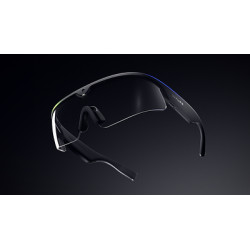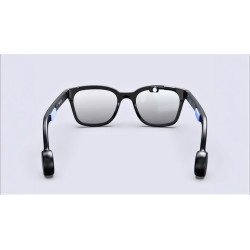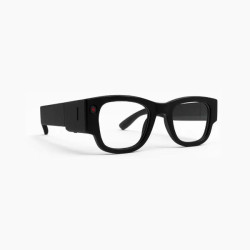
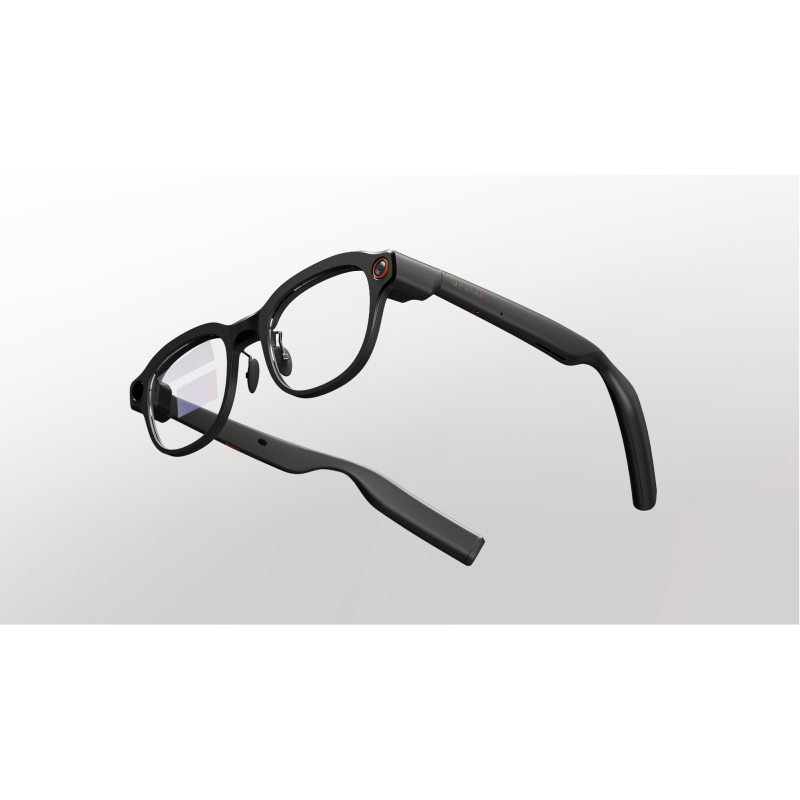
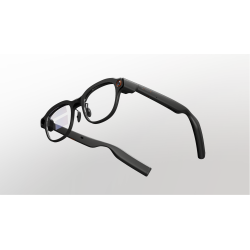
Monako Smart Glasses, also known as Monako Glass, are intelligent glasses designed as a lightweight, mobile AI work environment. The product is positioned not as a typical consumer gadget for taking photos or receiving notifications, but as a productivity tool for developers, creators, researchers, and people working with AI agents.
Preview
Monako Smart Glasses
Monako Smart Glasses, also known as Monako Glass, are intelligent glasses designed as a lightweight, mobile AI work environment. The product is positioned not as a typical consumer gadget for taking photos or receiving notifications, but as a productivity tool for developers, creators, researchers, and people working with AI agents.
The device combines a waveguide display, camera, speakers, bone-conduction microphone, and the Linux-based MonoOS operating system in a single construction. As a result, the glasses are designed to function as a personal AI terminal, enabling communication with tools such as Claude Code, Codex, as well as creative and development environments.
A key differentiator of Monako Glass is the concept of a “wearable agent terminal” — a portable terminal for AI agents. The user can issue voice commands, use gestures, and work with applications or agents without the need for a keyboard or a traditional monitor. The glasses are intended to support tasks such as reviewing work results, sending prompts, approving actions, generating applications, conducting research, creating presentations, and integrating with development and creative tools.
Monako Glass uses MonoOS, a Linux-based operating system with a Lua/LuaJIT application layer and the built-in Rive animation environment. This approach is intended to enable the fast launch of lightweight applications, including those generated by AI agents. The manufacturer emphasizes the ability to create hyper-personalized applications using voice commands, as well as the glasses’ ability to work with a local computer, cloud environments, and AI tools.
Another important element is the method of data input. Monako Glass uses a bone-conduction microphone that captures vibrations from the area around the nose, which is intended to improve voice command recognition in noisy environments. This is complemented by Vision Engine, a gesture recognition system that allows the user to control the interface hands-free or with minimal hand movement.
Key Features
lightweight smart glasses weighing approximately 48 g,
waveguide display for presenting information within the user’s field of view,
built-in camera, speakers, and microphone,
bone-conduction microphone for improved voice command capture,
Linux-based MonoOS system,
Lua/LuaJIT application layer,
support for lightweight applications and AI interfaces,
Vision Engine for gesture control,
integration with AI agents and developer tools,
compatibility with Claude Code, Codex, Unreal Engine, Blender, and After Effects,
use as a mobile AI terminal for developers, researchers, and creators.
Specification
Product name: Monako Smart Glasses / Monako Glass
Device type: AI smart glasses / wearable AI terminal
Weight: approx. 48 g / 1.7 oz
Display: Waveguide display
Camera: Built-in camera
Audio: Built-in speakers
Microphone: Bone-conduction microphone capturing vibrations from the area around the nose
Operating system: MonoOS
System base: Linux
Application layer: Lua / LuaJIT
Graphics runtime: Rive Animation Runtime
Control: Voice, gestures, Vision Engine
Vision Engine: Micro-gesture control system; according to available information, it uses a 0.5 TOPS NPU
Supported scenarios: AI coding, research, application generation, presentations, creative workflows, working with AI agents
Integrations / tools: Claude Code, Codex, Unreal Engine, Blender, After Effects
Operating mode: Front-end for tasks performed locally, in the cloud, or by AI agents
Use Cases
Monako Glass may be an interesting solution for people who want to work with AI in a more natural way than through traditional computer operation. The product is particularly well suited to the needs of developers, engineers, researchers, 3D content creators, and people using AI agents to automate their work.
In practice, the glasses can serve as a mobile interface for issuing commands, controlling processes, reviewing results, approving actions, and creating simple, personalized applications without the need to constantly use a keyboard, mouse, and monitor.
Monako Smart Glasses are next-generation AI smart glasses designed as a portable work terminal for AI agents. By combining a lightweight construction, the Linux-based MonoOS system, a waveguide display, bone-conduction microphone, and gesture control, the device is intended to enable programming, research, application creation, and creative tool operation in a more natural, mobile, and keyboard-free way.
Monako Smart Glasses, also known as Monako Glass, are intelligent glasses designed as a lightweight, mobile AI work environment. The product is positioned not as a typical consumer gadget for taking photos or receiving notifications, but as a productivity tool for developers, creators, researchers, and people working with AI agents.