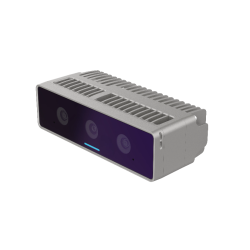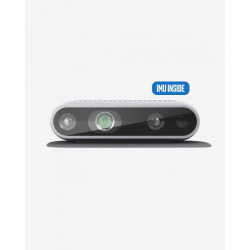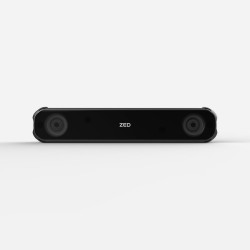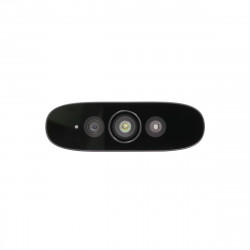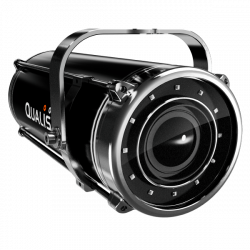
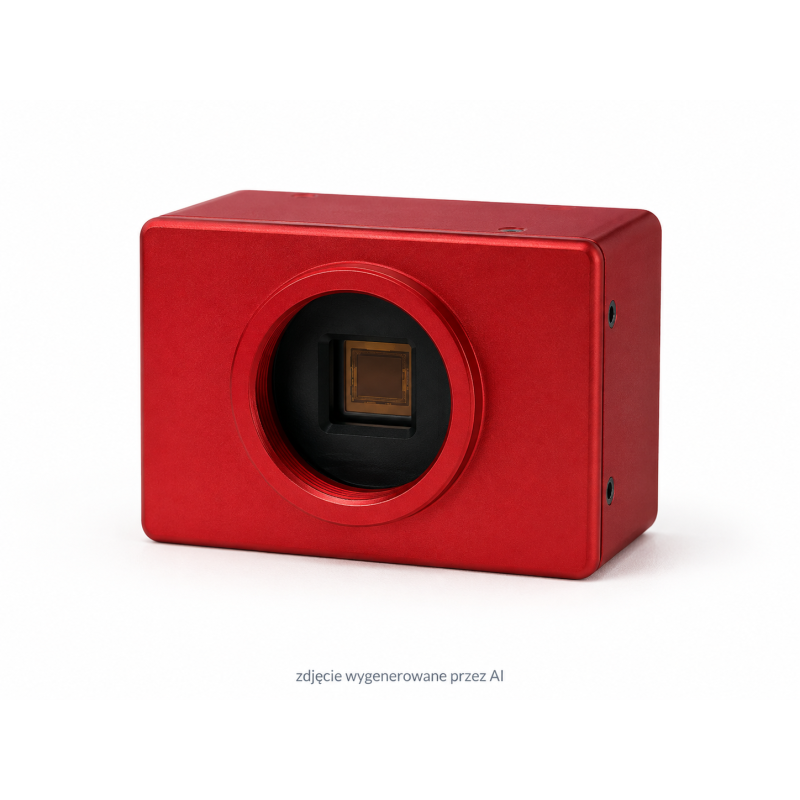
iniVation is a family of advanced neuromorphic cameras using DVS (Dynamic Vision Sensor) technology. Unlike a traditional camera, which captures entire images at specific intervals, the DVS sensor independently detects brightness changes at the individual pixel level and transmits only information about these changes as events.
iniVation – Event-Based Vision Neuromorphic Cameras
iniVation is a family of advanced neuromorphic cameras using DVS (Dynamic Vision Sensor) technology. Unlike a traditional camera, which captures entire images at specific intervals, the DVS sensor independently detects brightness changes at the individual pixel level and transmits only information about these changes as events.
This solution enables the observation of very fast phenomena with low latency, high dynamic range, and significantly less data generation than with traditional cameras operating at very high frame rates.
iniVation cameras are designed for scientific research, robotics, autonomous vision systems, high-speed object tracking, motion analysis, SLAM, industrial automation, and the design and testing of event-based computer vision algorithms.
Key Technology Features
Event-Based Vision neuromorphic technology
DVS (Dynamic Vision Sensor) sensors
Asynchronous detection of brightness changes at the individual pixel level
Very low latency – typically less than 1 ms
High temporal resolution
Dynamic range up to approximately 120 dB, depending on the model
Captures fast motion without the need to generate thousands of full image frames
Reduces the amount of data transferred by transmitting only information about changes in the image
Ability to work in conditions of large lighting differences
Built-in 6-axis IMU in main camera models
The IMU includes a 3-axis accelerometer and a 3-axis gyroscope
Hardware synchronization of multiple cameras is possible in selected models
Image and IMU data synchronization is possible
USB 3.0 / USB 3.1 communication, depending on the model
Ability to work with Windows, Linux, and macOS systems via DV software
C++, Python, and C programming interfaces available
Integration with ROS – Robot Operating System
Ability to create custom processing algorithms Event-Based Vision
Ability to record data in AEDAT4 format
Ability to filter, reconstruct images, track features, calibrate, estimate depth, and compensate for motion using proprietary libraries
Available Models
DVXplorer
The DVXplorer is a high-resolution DVS camera designed for demanding research, industrial, and robotic applications. The sensor generates a 640 x 480 pixel VGA event stream and can handle up to 165 million events per second.
DVS resolution: 640 × 480 px
Sensor type: DVS, event-only
Sensor technology: 90 nm BSI CIS
Temporal resolution: 200 µs
Typical latency: <1 ms
Maximum throughput: 165 MEPS – million events per second
Dynamic range: up to approximately 110 dB
Contrast sensitivity: approximately 13% with 50% active pixels
Built-in 6DoF IMU
Gyroscope: up to 3.2 kHz
Accelerometer: up to 1.6 kHz
Hardware multi-camera synchronization
External synchronization event input possible
Interface: USB 3.0 Micro-B with screw lock
Isolated sync input and output
Lens mount: CS-mount
Housing: Anodized aluminum
Dimensions: approximately 40 × 60 × 25 mm
Weight: approximately 100 g without Lens
Current consumption: less than 140 mA at 5 V
CE certification
DVXplorer Micro
The DVXplorer Micro is a compact and lightweight version of the event-based camera, designed for mobile robotics, drones, and projects where small size and weight are essential.
DVS resolution: 640 × 480 px
Sensor type: DVS, event-only
Sensor technology: 90 nm BSI CIS
Temporal resolution: 200 µs
Typical latency: <1 ms
Maximum throughput: 450 MEPS
Dynamic range: up to approximately 110 dB
Contrast sensitivity: approximately 13% with 50% active pixels
Built-in 6DoF IMU
Gyroscope: up to 3.2 kHz
Accelerometer: up to 1.6 kHz
Interface: USB 3.1 Type-C with screw security
Lens mount: S-mount / M12
Dimensions: approximately 24 × 27.5 × 29.7 mm
Weight: approximately 16 g without lens
Power consumption: less than 140 mA at 5 V
Compact housing
Included as standard 3 M12 lenses
The DVXplorer Micro boasts the highest event throughput of any standard DVS camera currently available in the iniVation store – up to 450 million events per second.
DVXplorer Lite
DVXplorer Lite is a cost-effective model designed for entry-level Event-Based Vision technology, teaching, research, and algorithm prototyping.
DVS resolution: 320 × 240 px
Sensor type: DVS, event-only
Sensor technology: 90 nm BSI CIS
Temporal resolution: 200 µs
Typical latency: <1 ms
Maximum throughput: 100 MEPS
Dynamic range: up to approximately 110 dB
Contrast sensitivity: approximately 13% with 50% active pixels
Built-in 6DoF IMU
Gyroscope: up to 3.2 kHz
Accelerometer: up to 1.6 kHz
Hardware multi-camera synchronization
External synchronization capability
Interface: USB 3.0 Micro-B
USB connector security screws
Isolated sync ports
Lens mount: CS-mount
Dimensions: approximately 40 × 60 × 25 mm
Weight: approximately 75 g without lens
Certification CE
DAVIS346
The DAVIS346 combines two image acquisition methods in a single sensor: traditional frames and asynchronous DVS events. This allows for simultaneous acquisition of traditional images and event-based data during a single experiment.
DAVIS stands for Dynamic and Active-pixel Vision Sensor.
DVS event resolution: 346 × 260 px
Classic image resolution: 346 × 260 px
Simultaneous frame and event generation from a single sensor
Classic frame rate: up to 40 FPS
Event temporal resolution: 1 µs
Typical latency: <1 ms
Maximum event throughput: 12 MEPS
DVS dynamic range: approximately 120 dB
Frame dynamic range: approximately 55 dB
Built-in 6DoF IMU
IMU sampling rate: up to 8 kHz
Hardware multi-camera synchronization
External synchronization event input possible
Interface: USB 3.0 Micro-B
USB connector security screws
Isolated sync I/O
Lens mount: CS-mount
Anodized aluminum housing
Dimensions: approximately 40 × 60 × 25 mm
Weight: approximately 100 g without lens
Power consumption: less than 180 mA at 5 V
CE certification
DAVIS346 Variants
DAVIS346 MONO
Monochrome event and frame sensor
Simultaneous grayscale and Event-Based Vision
DAVIS346 Color
Color sensor using a Bayer RGB filter
Color image frames
Ability to work with color information from the sensor
Ability to obtain RAW data and reconstruct RGB in software
DAVIS346 AER
The DAVIS346 AER is an extended version of the DAVIS346 equipped with a hardware AER (Address Event Representation) interface, enabling direct output of the event stream beyond the standard USB interface.
This solution is primarily intended for experimental neuromorphic systems, hardware integration, FPGAs, and specialized event processing platforms.
DVS resolution: 346 × 260 px
Frame resolution: 346 × 260 px
Simultaneous frame and event streams via USB
Separate event output via AER
Temporal resolution: 1 µs
Typical latency: <1 ms
Maximum throughput: 12 MEPS
DVS dynamic range: approximately 120 dB
Classic frames up to 40 FPS
6DoF IMU up to 8 kHz
USB 3.0 Micro-B
AER connector
CS-mount lens mount
Dimensions: approximately 40 × 78.8 × 28.5 mm
Weight: approximately 100 g without lens
Available variants:
DAVIS346 AER MONO
DAVIS346 AER COLOR
Stereo Kits
Stereo Kits enable the simultaneous use of two event-based cameras and the conduction of synchronized stereo vision measurements.
Available Configurations:
DVXplorer Stereo Kit
DVXplorer Lite Stereo Kit
DAVIS346 MONO Stereo Kit
DAVIS346 Color Stereo Kit
A typical Stereo Kit includes:
2 iniVation cameras
2 USB cables
2 lenses
Mounting components
Stereo configuration boards
Sync cable
Tripods
Transport cases
The kits enable research on stereo vision, depth estimation, 3D reconstruction, and localization and navigation algorithms, among other things.
Additional Model – DVXplorer S Duo
Current manufacturer documentation also lists the DVXplorer S Duo as a current product. However, this model is not currently listed in the main catalog of the iniVation online store, so its availability should be confirmed before ordering.
This is a standalone, embedded platform that combines an event-based camera with a classic color camera and an NVIDIA Jetson Nano computer.
DVS sensor: 640 × 480 px
OnSemi AR0234 color global shutter sensor: 1920 × 1200 px
Processor: NVIDIA Jetson Nano
CPU: 4 × ARM Cortex-A57 up to 1.43 GHz
GPU: NVIDIA Maxwell, 128 CUDA cores
RAM: 4 GB DDR4
eMMC memory: 16 GB
Approximately 6 GB of space available for user data and recordings
Bosch BMI160 IMU
3-axis accelerometer
3-axis gyroscope
Gigabit Ethernet
Power over Ethernet – PoE 802.3af
USB 3.0 Type-C
Mini-HDMI 1.4
SPI, GPIO, and PWM interfaces
2 M12 lens mounts
Dimensions: approximately 32 × 80 × 92 mm
Weight: approximately 220 g without lenses
Embedded Linux system based on Yocto
Built-in DV-SDK Runtime
Ability to locally develop custom data processing modules
Software Required for Operation
DV
The manufacturer's primary environment for working with cameras is DV – open-source software for configuring, visualizing, recording, and processing data from event-based cameras.
DV enables:
Detection and management of connected iniVation cameras
Viewing event-based data in real time
Viewing classic frames in the case of DAVIS
Visualization of IMU data
Configuring camera parameters
Configuring DVS sensor parameters
Recording data
Playback of recorded experiments
Saving data in AEDAT4 format
Camera calibration
Constructing processing processes using DV modules
Real-time data processing
DV is available for:
Windows 64-bit
macOS Intel
macOS Apple Silicon / ARM
Linux
DV-Processing
A programming library for creating custom applications using event-based cameras.
Supported languages:
C++
Python
DV-Processing enables, among other things:
direct communication with iniVation cameras
event capture
file reading and writing
event filtering
image reconstruction from events
camera calibration
feature detection
feature tracking
motion analysis
event grouping
motion compensation
depth estimation
working with camera geometry
implementation of custom Event-Based Vision algorithms
DV-SDK
A software development kit that allows you to extend the functionality of the DV environment.
Creating your own DV modules
Integrating your own algorithms
Processing event streams
Integrating with existing computer vision systems
Working with DV-Runtime
DV-Runtime
A runtime environment responsible for:
Running DV modules
Thread management
Memory management
Data exchange between modules
Building your own data processing pipelines
DV-ROS
Integrating iniVation cameras with ROS – Robot Operating System.
Accessing cameras from ROS
Publishing event-based data as ROS topics
Integration with robotic systems
Pre-built event processing algorithms available as ROS nodes
Ability to use cameras in autonomous robot and SLAM system projects
libcaer
A low-level C/C++ library enabling direct communication with iniVation devices.
It is primarily intended for users building their own custom systems and requiring direct access to the hardware.
No programming is required for typical camera use. The DV software provides a graphical interface for configuring the camera, visualizing, recording, and playing back data. The DV-Processing, DV-SDK, DV-ROS, and libcaer libraries are designed for more advanced integration and creating custom applications.
Applications
Event-Based Vision
Neuromorphic Vision
Computer Vision
Machine Vision
Machine Vision Research
Robotics
Mobile Robotics
Autonomous Robots
Drones and UAVs
High-Speed Object Tracking
Motion Tracking
Feature Tracking
Fast Motion Detection and Analysis
Trajectory Analysis
Visual Odometry
SLAM – Simultaneous Localization and Mapping
Visual-Inertial Odometry
Autonomous Navigation
Localization and Positioning
Obstacle Detection
Low-Latency Vision Systems
Real-Time Robot Control
Industrial Automation
High-Speed Control Systems
Industrial Process Monitoring
Study of Fast-Moving Elements
Vibration and Vibration Analysis
Object Tracking in Difficult Lighting Conditions
HDR Systems
Stereovision
Depth Estimation
3D Reconstruction
Camera and IMU Data Fusion Research
Artificial Intelligence Research
Neural Networks
Spiking Neural Networks
Neuromorphic Computing
Edge AI
C++ and Python Algorithm Development
ROS Projects
Autonomous Vehicle Research
Automotive and ADAS Systems
AR/VR/XR Systems
Fast Position Tracking Systems
Robotics and Automation Laboratories
Universities and Research Centers
R&D Projects
Event-Based Vision and Neuromorphic Computing Education
iniVation is a family of advanced neuromorphic cameras using DVS (Dynamic Vision Sensor) technology. Unlike a traditional camera, which captures entire images at specific intervals, the DVS sensor independently detects brightness changes at the individual pixel level and transmits only information about these changes as events.