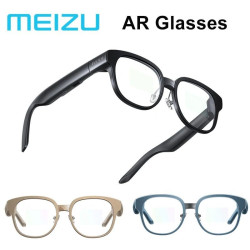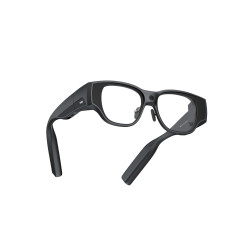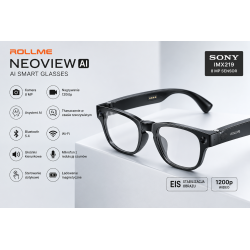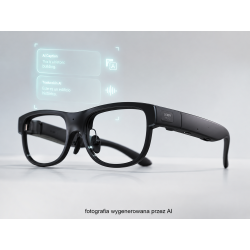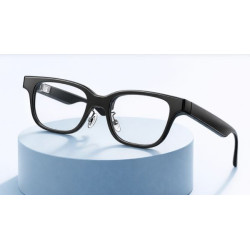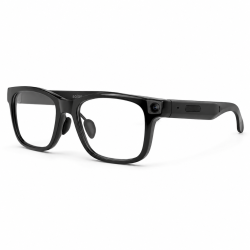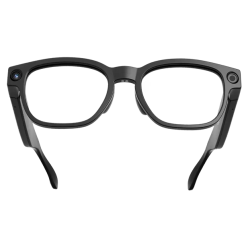
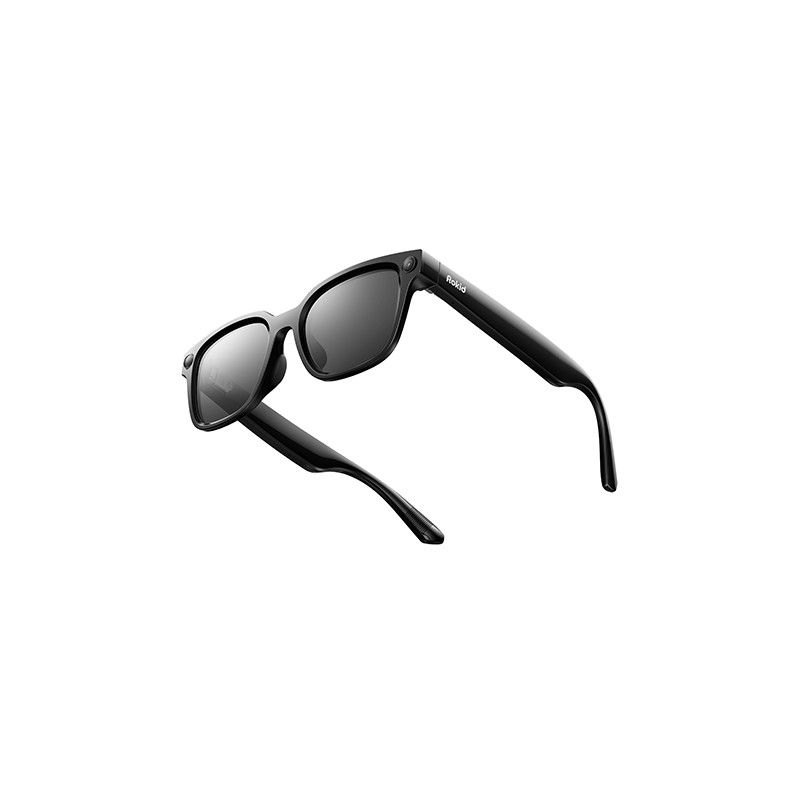
Rokid AI Line is a family of smart glasses combining a first-person camera, open speakers, directional microphones, and AI-powered features. Depending on the model, information is presented on a Micro-LED display directly in the field of view or transmitted solely via voice through the speakers. These glasses enable features such as using an AI assistant, taking photos and recordings, translating conversations, recognizing objects, taking meeting notes, managing calls, and navigation.
Rokid AI Line
Rokid AI Line is a family of smart glasses combining a first-person camera, open speakers, directional microphones, and AI-powered features. Depending on the model, information is presented on a Micro-LED display directly in the field of view or transmitted solely via voice through the speakers. These glasses enable features such as using an AI assistant, taking photos and recordings, translating conversations, recognizing objects, taking meeting notes, managing calls, and navigation.
Available Models
Rokid Glasses – Display Smart Glasses – a model with a binocular, monochrome Micro-LED display. It displays translations, subtitles, AI responses, navigation directions, a teleprompter script, notifications, and basic system information.
Rokid AI Glasses Style – Non-Display – a lighter model without a display, designed primarily for voice control, taking photos and recordings, making calls, listening to audio, and using the AI assistant. Rokid AI Glasses NEO – Non-Display – a model without a display, positioned by the manufacturer as an everyday voice-controlled variant with a longer stated battery life.
Rokid AI&AR Bundle – a sales bundle, not a separate glasses model.
Important note regarding naming conventions: Rokid's official websites are not entirely consistent. The global store lists both the Style and NEO models, but the NEO card repeats the specifications and part of the Style model description, and even indicates Style in the package contents. Therefore, there is insufficient public data to clearly identify all the hardware differences between Style and NEO. Before preparing a data sheet or ordering, please verify the specific SKU number, bundled features, and the distribution market.
Specifications – Rokid Glasses with Display
Design: AI/AR smart glasses with a binocular display.
Weight: approximately 49 g.
Main processor: Qualcomm Snapdragon AR1 Gen 1.
Subprocessor: NXP RT600.
RAM: 2 GB RAM.
Internal memory: 32 GB.
Display: Monochrome, green Micro-LED with a diffractive waveguide.
Display resolution: 480 × 640 pixels.
Display field of view: 30°.
Brightness: up to 1500 nits.
Eye relief: 18 mm.
Camera: Sony IMX681, 12 MP.
Photo resolution: 3024 × 4032 pixels.
Aperture: f/2.25.
Camera field of view: 109° diagonal.
Focus: Fixed, no autofocus.
Focus range: from approximately 34 cm to infinity.
Microphones: Four directional microphones with noise reduction.
Speakers: Two directional open-ear AAC speakers.
Connectivity: Wi-Fi 6.
Smartphone connectivity: Bluetooth 5.3.
Battery: 210 mAh.
Claimed mixed use time: approximately 8–10 hours.
Music playback: approximately 5–6 hours.
Voice calls: approximately 4 hours.
Continuous display: approximately 2 hours.
Intensive recording: approximately 45 minutes.
Fast charging: approximately 80–90% in 20 minutes, under appropriate conditions.
Charging: Dedicated magnetic connector; optional charging case and battery capsule. Resistance: IPX4, meaning it's splash-proof but not submersible.
Corrective lenses are compatible with myopia, astigmatism, and progressive lenses using an additional magnetic insert.
The manufacturer provides inconsistent information regarding maximum recording resolution and housing dimensions. Various official websites mention 1680p, 3K, and 4K, among other things.
Specifications – Rokid AI Glasses Style / NEO without display
Design: AI glasses without a display in the lenses.
Information: Voice prompts via speakers and information in the mobile app.
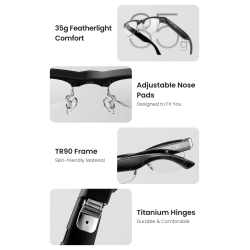
Weight: 38.5 g without prescription lenses.
Width between hinges: 149 mm.
Lens height: 50.6 mm.
Lens width: 53 mm.
Bridge width: 21 mm.
Temple length: 157 mm.
Frame material: flexible TR90 plastic.
Main processor: Qualcomm Snapdragon AR1 Gen 1.
Secondary processor: NXP RT600.
RAM: 2 GB RAM.
Internal memory: 32 GB.
Camera: Sony IMX681, 12 MP.
Photo resolution: 3024 × 4032 pixels. Aperture: f/2.25.
Camera field of view: 109° diagonal.
Focus: Fixed, no autofocus.
Focus range: from approximately 34 cm to infinity.
Microphones: Quad-microphone array.
Speakers: Two directional open-ear AAC speakers.
Wi-Fi: Wi-Fi 6.
Bluetooth: Bluetooth 5.3.
Glasses battery: 210 mAh.
Claimed typical operating time: up to 12 hours.
Optional power supply: 3000 mAh charging case and 1700 mAh battery capsule.
Lens support: nearsightedness, astigmatism, farsightedness, presbyopia, and progressive lenses; availability varies by market and optical partner.
In-lens text and navigation display: None.
Key Features
Voice assistant activated by the command "Hi Rokid" or a touch button.
Ability to choose from supported AI models, including ChatGPT, Gemini, DeepSeek, and Qwen – depending on region, app version, and service availability.
Ask questions and get answers by voice.
Recognize objects, scenes, characters, and text using the camera.
Take photos and recordings from the user's perspective.
Transcribe conversations and meetings.
Create summaries and voice notes.
Real-time conversation translation.
Navigation using a smartphone connection.
Manage phone calls.
Play music and announcements.
For the model with a display: teleprompter, subtitles, navigation directions, AI responses, and in-field notifications.
Software required for operation
Mobile app required: Hi Rokid – Rokid Glasses.
iOS: iOS 16.0 or later recommended.
Android: Android 12 or later recommended. The app is required for initial pairing and activation of the glasses.
Registration or logging in to a Rokid account is required.
The app is responsible for device configuration, AI model selection, photo and recording management, translation settings, teleprompter, firmware updates, and configuration of available services.
Pairing should be performed through the Hi Rokid app, not solely through your phone's Bluetooth settings.
Connection to a smartphone uses Bluetooth 5.3 and, depending on the feature, Wi-Fi.
Navigation requires a phone connection and active internet access.
Most AI and online translation features require a network connection.
Offline translation requires activating the glasses and downloading the appropriate language model in the app.
Privacy Information:
Selected device functions may involve recording images or sound and transmitting data to external services. Before deploying the device within an organization, it is necessary to verify the application configuration, the scope and location of data processing, the legal basis for the intended use, and the requirements regarding the notification of individuals whose data may be recorded.
Rokid AI Line is a family of smart glasses combining a first-person camera, open speakers, directional microphones, and AI-powered features. Depending on the model, information is presented on a Micro-LED display directly in the field of view or transmitted solely via voice through the speakers. These glasses enable features such as using an AI assistant, taking photos and recordings, translating conversations, recognizing objects, taking meeting notes, managing calls, and navigation.