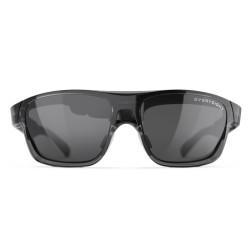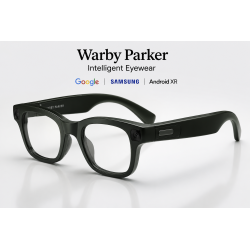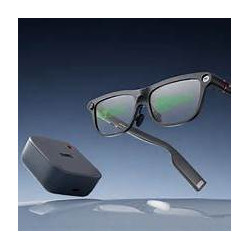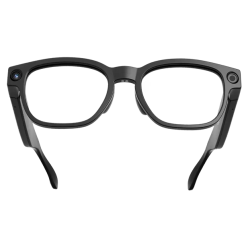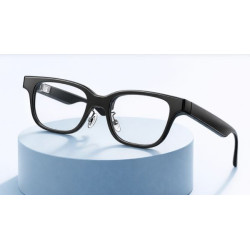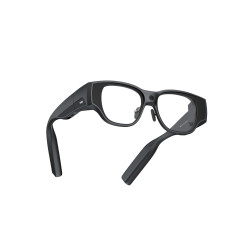
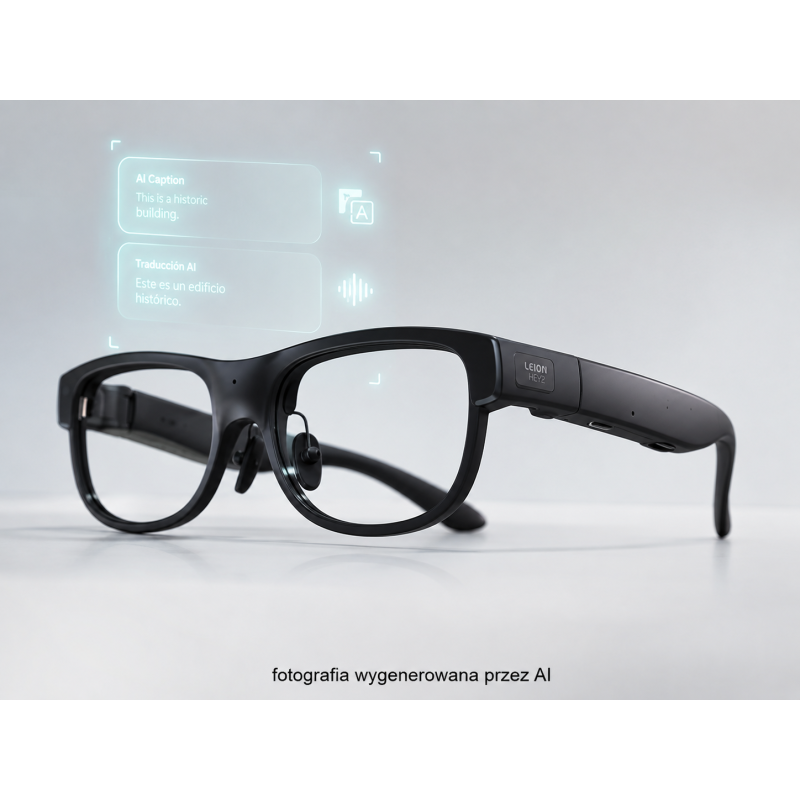
Leion Hey 2 are AR (Augmented Reality) smart glasses designed primarily for translating conversations and displaying subtitles in real time directly in the user's field of view. The device records speech using four microphones, processes it using a mobile app and artificial intelligence services, and then presents the recognized or translated text on a transparent display in the lenses.
Product available in the official online store of the manufacturer LEION
https://leion.glass/pl-pl/products/leion-hey-2-smart-ar-glasses
Pronet Kraków does not currently sell this product.
Leion Hey 2 – AR Smart Glasses for Translation and Transcription
Leion Hey 2 are AR (Augmented Reality) smart glasses designed primarily for translating conversations and displaying subtitles in real time directly in the user's field of view. The device records speech using four microphones, processes it using a mobile app and artificial intelligence services, and then presents the recognized or translated text on a transparent display in the lenses.
This solution is focused on communication, meetings, travel, presentations, and supporting people with hearing loss. The glasses do not have a camera or speakers, so they cannot be used for taking photos, recording videos, or playing multimedia like traditional consumer "smart glasses."
Key Features
Displaying subtitles directly in the field of view,
Real-time speech translation,
Two-way Free Talk mode,
Voice recognition from multiple directions,
Directional recording of the person in front of the user,
Noise and ambient noise reduction,
Teleprompter that scrolls during speech,
Creating transcripts and meeting summaries,
AI Q&A function [Artificial Intelligence Questions and Answers],
Q&A integration with ChatGPT,
Ability to use additional corrective lenses.
Technical Specifications
Device type: AR smart glasses for transcription and translation,
Weight: approximately 49 g without additional corrective lenses,
Dimensions: 167 × 150/151 × 46 mm,
Display resolution: 480 × 640 pixels,
Display method: Text presented on a transparent optical display within the lenses,
Display text color: green,
Number of microphones: 4,
Audio capture: 360° surround system,
Noise reduction: neural algorithms and directional microphone beamforming,
Claimed recognition and translation accuracy: up to 98%,
Claimed latency: less than 500 ms, up to approximately 200 ms in favorable conditions,
Bluetooth: BLE [Bluetooth Low Energy] 5.4,
Wi-Fi connectivity: 2.4 GHz and 5 GHz,
Glasses battery capacity: 245 mAh,
Operating time: up to 8 hours with typical use,
Continuous operation time: according to the manufacturer's FAQ, approximately 6 hours with uninterrupted conversation,
Charging case capacity: 3100 mAh,
Number of additional charges from the case: up to 12,
Declared total operating time from the case: up to 96 hours,
Glasses charging: magnetic connector or charging case,
Maximum speech pickup range: up to 10 m in a quiet environment,
Recommended distance in noisy environments: up to approximately 3 m,
Camera: none,
Speaker: none,
Water resistance: only basic protection during everyday use; the manufacturer prohibits using the glasses in the rain, submerging them in water, or washing them under running water.
Ability to use prescription lenses: yes, special lenses offered by the manufacturer are recommended.
Minimum Android version specified by the manufacturer: Android 8.0
Current requirement for the LEION app in the Apple App Store: iOS 12.0 or later
The manufacturer lists iOS 11.0 on the product page, but the practical minimum is based on the current App Store requirement.
Software Required
App Required: LEION or Leion Hey
The app is available for Android on Google Play
The app is available for iPhone on the Apple App Store
The app is free to download
The app contains in-app purchases or allows you to activate paid Pro translation minutes
The app is responsible for connecting to the glasses, selecting languages, running transcription and translation, viewing call history, and updating firmware
A compatible smartphone is required for full functionality
Standard internet features require a Bluetooth connection and your phone's internet access via Wi-Fi or cellular data
The iOS app interface is officially available only in English and Simplified Chinese
The Polish version of the app interface has not been confirmed
The manufacturer does not provide a clear official list of the app's interface languages on Android.
Offline Operation
The manufacturer's documentation is currently not fully consistent regarding offline functionality. The Polish version of the FAQ and the current version history of the LEION application confirm limited support for offline subtitles and translation for selected languages. However, no confirmation of offline support for the Polish language was found. Therefore, when translating from or to Polish, an internet connection should be assumed.
Polish Language Support
Polish is included in the official list of over 100 supported languages and accents.
Polish is not included in the basic package, which includes 11 languages.
The basic languages are: English, Chinese, Japanese, Korean, French, German, Spanish, Russian, Arabic, Italian, and Thai.
The Basic package primarily supports translation of selected languages into Chinese or English.
Full two-way translation and Polish require Pro Translation Access.
The manufacturer's current offer includes 1,200 Pro minutes included with a new device.
After using up the included minutes, additional minutes are charged.
Pro Translation Cost
According to the manufacturer's official price list:
120 minutes – $9.90,
1,200 minutes – $49.90,
6,000 minutes – $199.90.
This is not a traditional monthly subscription. The user purchases a specific pool of minutes. To activate minutes, the manufacturer requires the device's PSN number, and the current purchase instructions also indicate that you must contact technical support. Prices and the 1,200-minute promotion for a new device are subject to change.
How does translation take place?
The interlocutor speaks their native language,
four microphones in the glasses record the utterance,
the system recognizes speech and transmits it to the translation engine,
the translated text appears directly on the display in the lenses,
in two-way mode, the user can respond in their native language,
the user's response is translated and presented to the other person as text and a voice message,
since the glasses do not have a speaker, the voice message for the interlocutor must be played through a connected phone or other compatible audio device,
the conversation can be saved in the app as a transcript and then summarized by the AI functions.
Advantages:
Subtitles and translation are visible directly in front of the eyes, eliminating the need for the user to constantly look at the phone screen.
Polish language support in the Pro package.
Over 100 languages and accents in the extended service.
Two-way voice translation.
Low claimed latency.
Four microphones and directional noise reduction.
Ability to select front-facing or ambient voice recording.
Relatively long battery life and a rechargeable case.
The lack of a camera increases the device's acceptability in places where video recording is prohibited.
Usability for the hearing impaired thanks to real-time subtitles.
The ability to create transcripts and meeting summaries.
A teleprompter function.
Adaptable to corrective lenses.
Independent tests indicate good display readability even in bright light and effective voice isolation in favorable conditions.
Disadvantages and limitations
Polish is not available in the basic 11-language package.
After the included allowance is used, translations with Polish are charged for each additional minute.
No Polish version of the iOS app interface.
A smartphone is required.
Polish translation requires an internet connection.
The performance and speed of translation depend on the quality of the Bluetooth connection and data transmission.
The lack of a speaker in the glasses means that voice translation of responses must be played through the phone.
The lack of a camera limits the glasses' use for image analysis, object recognition, taking photos, and video calls.
The weight of approximately 49–50 g without lenses is heavier than that of standard glasses. In an independent test, the version with lenses weighed approximately 60 g.
The manufacturer claims accuracy of "up to 98%," but this does not mean consistent accuracy in all conditions.
Noise, accent, quiet speech, a mask covering the mouth, and simultaneous speech by multiple speakers can reduce recognition quality.
Users have reported skipping the beginning of speech, incorrect word recognition, and problems with multiple speakers speaking simultaneously.
Text or a green tint may be partially visible to those viewing the user from a certain angle.
Reflections or a "ghosting" effect may occur in dark environments.
The glasses are not intended for use in rain.
Cloud computing may pose a limitation for organizations processing sensitive information. Please review the privacy policy and data processing terms before using them for medical, legal, or business interviews.
The most important caveat: "98% accuracy" and "latency below 500 ms" are manufacturer claims, and actual results depend on language, connection quality, accent, and acoustic conditions.
Leion Hey 2 are AR (Augmented Reality) smart glasses designed primarily for translating conversations and displaying subtitles in real time directly in the user's field of view. The device records speech using four microphones, processes it using a mobile app and artificial intelligence services, and then presents the recognized or translated text on a transparent display in the lenses.