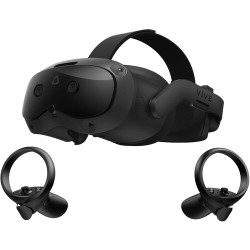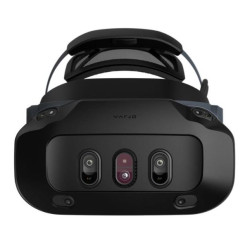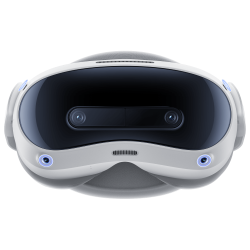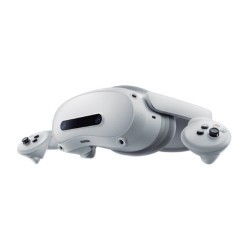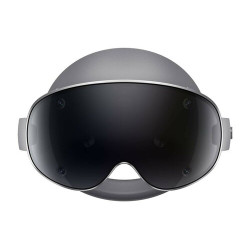
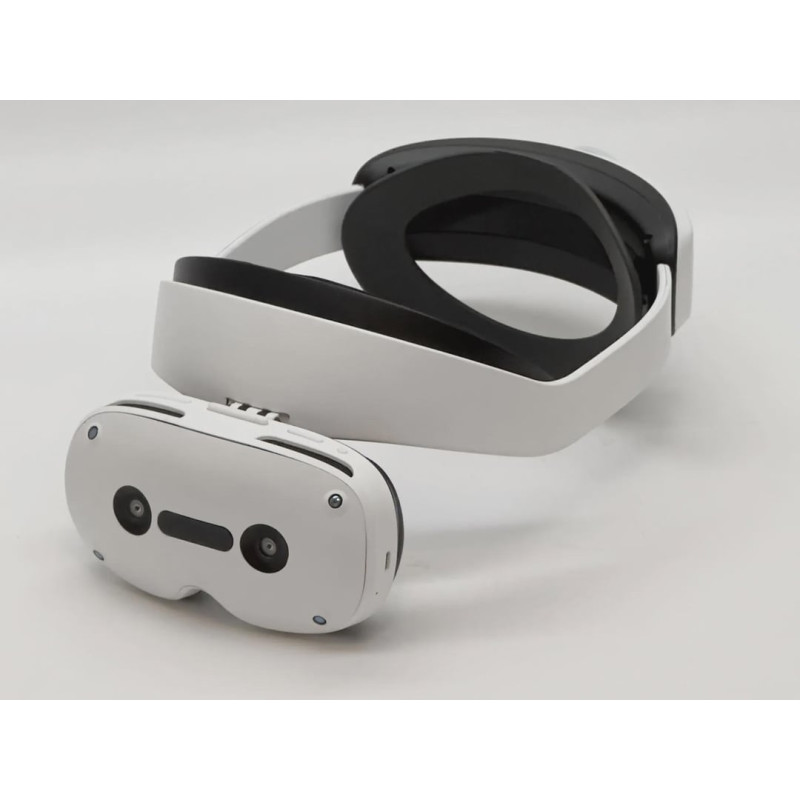
The LYNX-R2 is a standalone mixed reality headset designed primarily for industrial, medical, research, and professional applications. The device combines computer-generated imagery with a color image of the real environment transmitted by passthrough cameras.
The headset utilizes a Qualcomm Snapdragon XR2 Gen 2 processor, 16 GB of LPDDR5 memory, 128 GB of internal storage, and the LynxOS operating system based on Android and the OpenXR standard. It operates independently, without the need for a permanent connection to a computer.
The LYNX-R2 is a standalone mixed reality headset designed primarily for industrial, medical, research, and professional applications. The device combines computer-generated imagery with a color image of the real environment transmitted by passthrough cameras.
The headset utilizes a Qualcomm Snapdragon XR2 Gen 2 processor, 16 GB of LPDDR5 memory, 128 GB of internal storage, and the LynxOS operating system based on Android and the OpenXR standard. It operates independently, without the need for a permanent connection to a computer.
Two LCD displays with a resolution of 2312 × 2160 pixels and a 90 Hz refresh rate work with curved pancake lenses. The manufacturer claims a field of view of 126° horizontal and 103° vertical, which is a key feature of the R2 design.
The headset also features open access to data from cameras and sensors. The manufacturer provides synchronous access to raw data via the Lynx API, which may be important for computer vision laboratories, AI teams, robotics teams, and developers of custom spatial applications.
Who is the LYNX-R2 intended for?
The LYNX-R2 is primarily intended for organizations that require an independent mixed reality platform without dependence on consumer services, Google accounts, or a closed ecosystem.
Potential customers include:
industrial and manufacturing enterprises;
maintenance and service departments;
research laboratories;
AI, computer vision, and robotics teams;
technical and medical universities;
OpenXR application developers;
XR system integrators;
medical facilities conducting research and training projects;
critical infrastructure operators;
training centers;
public administration;
the aerospace and automotive sectors;
organizations requiring offline operation and data control.
Advantages
Standard operation without a constant connection to a computer.
Qualcomm Snapdragon XR2 Gen 2 processor.
16 GB LPDDR5 memory.
128 GB internal memory.
LynxOS based on Android and OpenXR.
No integrated Google services according to the manufacturer.
Full offline operation possible.
Wide 126° × 103° field of view.
High horizontal stereoscopic image overlap range – 80°.
Dual 2312 × 2160 pixel displays.
90 Hz refresh rate.
Color passthrough.
iToF depth sensor.
Four tracking cameras.
Hand tracking assisted by infrared illuminators.
Open access to sensor data via Lynx API.
Adjustable interpupillary distance.
Adjustable eye relief.
Compatible with prescription glasses. Flip-up front module.
Rear-mounted battery, balancing the front module.
Wi-Fi 7.
Bluetooth 5.4.
Four microphones.
European system architecture focused on data control
Disadvantages and limitations
Not yet released for sale.
Not fully documented device specifications.
Approximately two hours of battery life.
Active cooling with two fans.
The 550g weight can be noticeable during long sessions.
The angular resolution of 24 PPD in the center and 17 PPD at the edges may be insufficient for reading very small text or precision instruments.
No confirmation of external tracking system support.
No public information about official PC video streaming.
No confirmation of compliance with classified information requirements.
No public MDM system specifically for R2.
The LYNX-R2 is a standalone mixed reality headset designed primarily for industrial, medical, research, and professional applications. The device combines computer-generated imagery with a color image of the real environment transmitted by passthrough cameras.
The headset utilizes a Qualcomm Snapdragon XR2 Gen 2 processor, 16 GB of LPDDR5 memory, 128 GB of internal storage, and the LynxOS operating system based on Android and the OpenXR standard. It operates independently, without the need for a permanent connection to a computer.