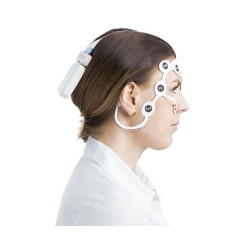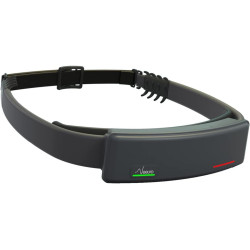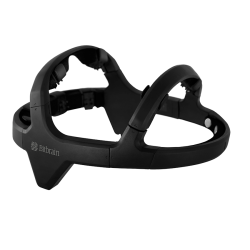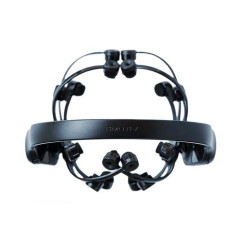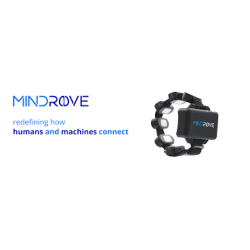
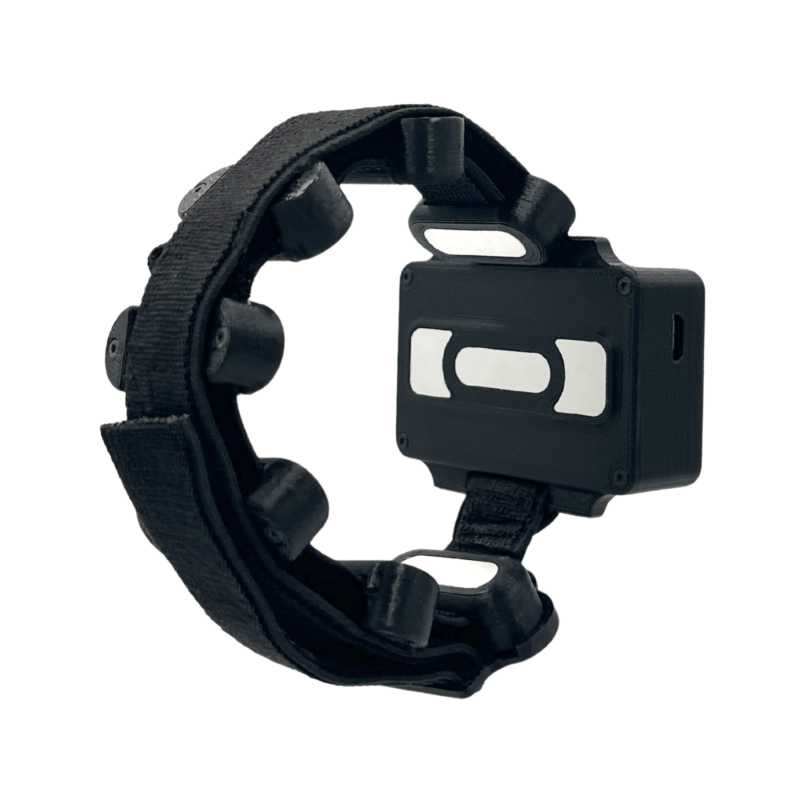
The MindRove Armband is a wireless, wearable EMG (Electromyography) recording system designed to measure the electrical activity of hand muscles.
The system utilizes 8 EMG channels distributed around the limb.
The device can be worn on the forearm or upper arm, allowing it to analyze various muscle groups.
The manufacturer's primary applications include gesture recognition, device control via muscle activity, scientific research, and the development of human-machine interfaces.
MindRove 8-Channel EMG Armband
The MindRove Armband is a wireless, wearable EMG (Electromyography) recording system designed to measure the electrical activity of hand muscles.
The system utilizes 8 EMG channels distributed around the limb.
The device can be worn on the forearm or upper arm, allowing it to analyze various muscle groups.
The manufacturer's primary applications include gesture recognition, device control via muscle activity, scientific research, and the development of human-machine interfaces.
The armband records raw EMG data, providing the user with access to the full signal and the ability to apply custom filtering, analysis, classification, and machine learning methods.
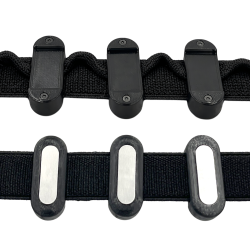
The system utilizes dry stainless steel electrodes, eliminating the need for standard skin preparation with conductive gel.
In addition to EMG, the device also features an integrated 6-axis IMU (Inertial Measurement Unit) sensor. The IMU consists of a 3-axis accelerometer and a 3-axis gyroscope, allowing for simultaneous analysis of muscle activity and limb movement.
Data from the EMG and IMU are transmitted wirelessly to a computer via Wi-Fi Direct.
The device's design allows for real-time signal recording without the need for a physical connection between the subject and the computer.
The device is adjustable and designed for multiple use by different users.
The manufacturer provides software for data visualization and recording, as well as an SDK (Software Development Kit) for creating custom applications.
The system supports Lab Streaming Layer (LSL), enabling real-time data streaming and integration with other devices and research environments.
The manufacturer positions the Armband primarily as a research and development device, not as a certified product intended for the diagnosis or treatment of diseases.
Available Models
MindRove Armband – Classic
Basic model – 8-channel EMG.
Hand circumference range: 21–35 cm.
Designed for standard forearm and upper arm sizes.
8 EMG channels.
Additional reference and DRL (Driven Right Leg) electrodes.
Electrodes made of stainless steel.
External electrode wires protected by a Teflon coating.
Flexible wire design allows for operation during movement.
This design has been used since previous generations of the device and is widely used in research projects.
The manufacturer describes this variant as the best value for money solution in the Armband family.
MindRove Armband 2 – Pro
Newer model – 8-channel EMG.
Uses the same basic EMG measurement platform as the Classic version.
Hand circumference range: 17–35+ cm.
About 20% more compact, according to the manufacturer.
The increased adjustment range allows for use with individuals with both smaller and larger hand circumferences.
Redesigned electrode holder.
Optimized electrode-skin contact surface.
More reliable electrode contact during use.
Optimized reference electrode position.
Better fit for diverse limb anatomy.
Wires are concealed and protected within the structure.
More compact and ergonomic design.
The design has been optimized for comfort during extended use.
Technical Specifications
Device Type: Wireless, Wearable EMG System.
Number of EMG Channels: 8.
Number of Electrodes: 8 + 2.
Additional Electrodes: Reference + DRL.
Electrode Type: Dry.
Electrode Material: Stainless Steel.
Electrode Arrangement: Evenly Around the Limb.
Recommended Placement Site: Forearm or Upper Arm.
EMG Sampling Rate: 500 Hz / 500 SPS.
Resolution: 24-bit.
Signal Bandwidth as Specified in the Manufacturer's Store: 0–250 Hz.
Gain as Specified by the Manufacturer: 12.
Access to Raw EMG Data: Yes.
Built-in Motion Sensor: 6-axis IMU.
Accelerometer: 3-axis.
Accelerometer Range: ±2 g.
Gyroscope: 3-axis.
Gyroscope range: ±500°/s.
IMU sampling rate: 50 Hz.
Access to raw IMU data: yes.
Connectivity: Wi-Fi Direct – device to computer.
Real-time streaming support: yes.
Real-time interface: Lab Streaming Layer (LSL).
Weight as stated in the common Armband family specification: approximately 100 g.
Fitness: adjustable.
Battery: rechargeable LiPo – lithium polymer.
Stated operating time: 4–6 hours.
Charging port: microUSB.
Software Required for Operation
MindRove Connect
The manufacturer's current primary software for operating the device is MindRove Connect.
The software allows for real-time viewing of the raw EMG signal.
It enables data recording.
It enables signal visualization and filtering.
It can control a single armband.
When used with MindRove, the SyncBox can record data from up to four MindRove devices.
A version for Windows is available.
A version for macOS is available.
According to the manufacturer's current website, MindRove Connect 2.9.2 for Windows and 2.10.0 for macOS are currently available.
MindRove SDK
The MindRove SDK is intended for users requiring direct access to the device and raw data.
The SDK enables integration of the armband with custom research programs, control systems, and applications.
Supported operating systems:
- Windows,
- macOS,
- Linux.
Supported languages and environments:
-C++,
-C#,
-Python,
-MATLAB.
The SDK allows you to download EMG and IMU data directly into your software.
It is particularly useful for scientific research, gesture control systems, robotics, and machine learning applications.
Lab Streaming Layer – LSL
Armband supports LSL (Lab Streaming Layer).
LSL enables the streaming of EMG and other experimental data in real time.
It allows you to synchronize data from various research devices and applications.
It facilitates the creation of multimodal experiments combining, for example, EMG, EEG, movement, experimental stimuli, or other biosignals.
The MindRove Armband is a wireless, wearable EMG (Electromyography) recording system designed to measure the electrical activity of hand muscles.
The system utilizes 8 EMG channels distributed around the limb.
The device can be worn on the forearm or upper arm, allowing it to analyze various muscle groups.
The manufacturer's primary applications include gesture recognition, device control via muscle activity, scientific research, and the development of human-machine interfaces.