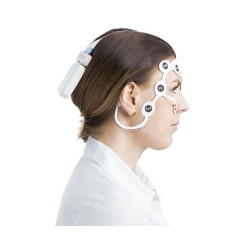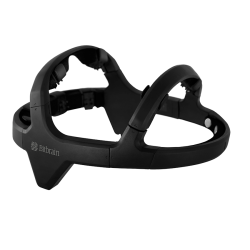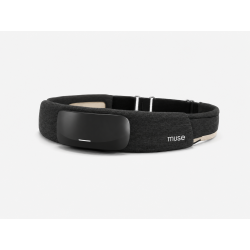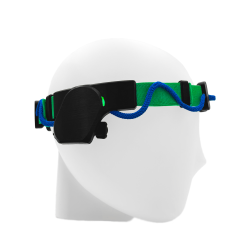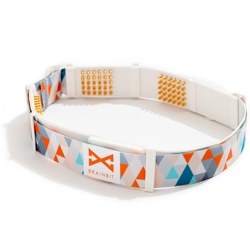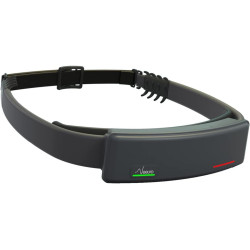
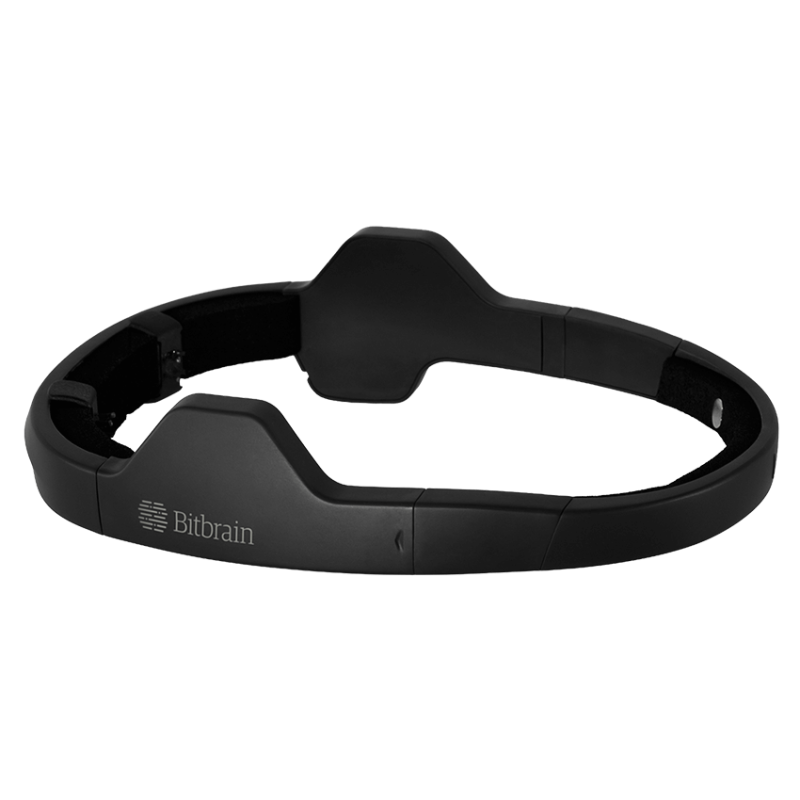
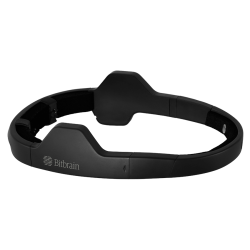
The Bitbrain Air 8ch EEG is a lightweight, mobile electroencephalography system using eight dry EEG electrodes, designed to record brain activity primarily in the prefrontal and occipital regions. The device's design has been optimized for conducting research in natural, real-world conditions, outside of a traditional laboratory.
The system does not require the use of gel, conductive pastes, or saline solutions. Dry sensors, an adjustable headband design, and wireless data transmission facilitate rapid subject preparation and recording. Active shielding and an optimized DRL (Driven Right Leg) system improve the quality of the recorded EEG signal.
The Bitbrain Air 8ch EEG is a lightweight, mobile electroencephalography system using eight dry EEG electrodes, designed to record brain activity primarily in the prefrontal and occipital regions. The device's design has been optimized for conducting research in natural, real-world conditions, outside of a traditional laboratory.
The system does not require the use of gel, conductive pastes, or saline solutions. Dry sensors, an adjustable headband design, and wireless data transmission facilitate rapid subject preparation and recording. Active shielding and an optimized DRL (Driven Right Leg) system improve the quality of the recorded EEG signal.
The Air enables real-time EEG data transmission via Bluetooth and local data backup on a microSD card. The device also features an integrated 9-axis IMU module, enabling the recording of subject movement.
Electrode placement has been optimized, among other things. in terms of analysis of alpha asymmetry in prefrontal areas, alpha rhythm in occipital areas and visual P300 potentials.
Specyfikacja techniczna
liczba kanałów EEG: 8
pozycje elektrod EEG: Fp1, Fp2, AF7, AF8, PO7, PO8, O1, O2
elektroda referencyjna REF: A1
elektroda GND: Fpz
rozmieszczenie elektrod zgodne z międzynarodowym systemem 10–10
rodzaj elektrod: suche elektrody EEG
aktywne ekranowanie sensorów
zoptymalizowany układ DRL – Driven Right Leg
zakres obwodu głowy: 530–610 mm
częstotliwość próbkowania: 256 SPS
rozdzielczość przetwornika: 24 bity
pasmo rejestrowanego sygnału: DC–40 Hz
filtr dolnoprzepustowy: 3. rzędu
kontrola impedancji elektrod w czasie rzeczywistym: tak – względna impedancja kontaktu
zakres wejściowy: ±100 mV
poziom szumu: <1 µVRMS w zakresie 0,5–30 Hz przy 256 Hz
CMRR (Common-Mode Rejection Ratio – współczynnik tłumienia sygnału wspólnego): >100 dB przy 50 Hz
impedancja wejściowa: >50 GΩ
zintegrowany moduł IMU: 9 osi
IMU obejmuje: akcelerometr, żyroskop i magnetometr
dodatkowe wejście cyfrowe: 1 × wejście 1-bitowe
dodatkowe wejście: 1 × trigger optyczny
transmisja bezprzewodowa: Bluetooth 2.1 + EDR
deklarowany zasięg transmisji: do 10 m przy bezpośredniej widoczności
lokalna kopia danych: karta microSD
obsługiwana karta pamięci: do 8 GB, Class 10 lub wyższa
format eksportowanych danych: CSV, EDF
akumulator: ładowalny Li-Po
czas ładowania: <3 godziny
czas pracy: >6 godzin
masa wzmacniacza: 82 g
gwarancja producenta: 2 lata
oznaczenie/certyfikacja: CE, zgodność z dyrektywą 2014/53/UE RED
Software Required for Operation
Bitbrain SennsLite – basic software supplied with the device
Included with the Air kit without an additional license
Used for device configuration and data acquisition
Enables real-time EEG signal monitoring
Enables electrode contact quality control
Enables data recording
Enables synchronized data acquisition from multiple Bitbrain devices
Supports data export to CSV and EDF formats
Ensures compliance with LSL – Lab Streaming Layer
Enables real-time collaboration with external environments, including BCI2000, OpenViBE, NeuroPype, and Medusa
Data can then be analyzed using tools such as: in Python/MNE and MATLAB/EEGLAB, FieldTrip, and BCILAB
Current SennsLite requirements:
Operating system: Windows 10 64-bit or newer or Ubuntu Linux 22.04
Processor: Intel Core i5 6th generation or newer
RAM: Minimum 8 GB
Free disk space: Minimum 1 GB
Bluetooth adapter: Bluetooth 5.0 or newer
Bluetooth Low Energy (BLE) support
Bitbrain SDK – software for integration and creating your own applications
Provided as part of Core Research Software
Enables direct communication with Bitbrain devices
Allows programmatic configuration and control of data acquisition
SDK written in C
Enables integration with Python
Supports Windows and Linux
Intended for, among other things, creating your own BCI (Brain-Computer Interface) applications
Optional research software
Bitbrain SennsLab – a licensed solution, not required for basic device operation.
Design of research experiments
Synchronized data acquisition
Integration of over 35 sensor types/modules
Simultaneous operation with EEG, eye tracking, and other biosignals
Synchronization of multiple data sources
Communication with external software via TCP/IP
Data export to CSV
Requires a separate Bitbrain license
Intended Use
The Bitbrain Air 8ch EEG is intended primarily for scientific research, human behavior experiments, and BCI projects, particularly where patient mobility and the ability to conduct measurements outside of a traditional laboratory setting are essential.
Typical applications:
EEG activity studies in natural and real-world conditions
Studies of basic cognitive and emotional states
Studies of alpha activity asymmetry in prefrontal areas
Analysis of alpha rhythms in occipital regions
Experiments utilizing the potential of the P300
Studies of responses to visual stimuli
Studies of human behavior and neuroergonomics
Studies of human-computer interaction
Development and testing of BCI (Brain-Computer Interface) applications
Studies of new methods of interaction with digital and physical products
Studies of user experience and environmental responses
Projects related to health and wellness solutions using BCI
Multimodal studies combining EEG with other biosignals
Simultaneous EEG and eye tracking studies
Experiments requiring synchronization of EEG, movement, and other physiological parameters.
The Bitbrain Air 8ch EEG is a lightweight, mobile electroencephalography system using eight dry EEG electrodes, designed to record brain activity primarily in the prefrontal and occipital regions. The device's design has been optimized for conducting research in natural, real-world conditions, outside of a traditional laboratory.
The system does not require the use of gel, conductive pastes, or saline solutions. Dry sensors, an adjustable headband design, and wireless data transmission facilitate rapid subject preparation and recording. Active shielding and an optimized DRL (Driven Right Leg) system improve the quality of the recorded EEG signal.