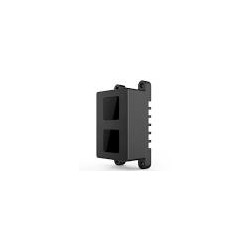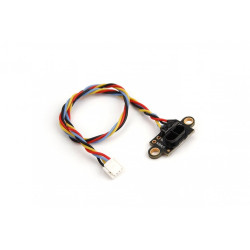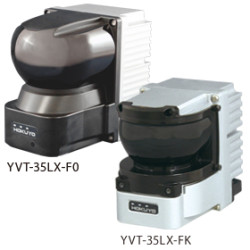
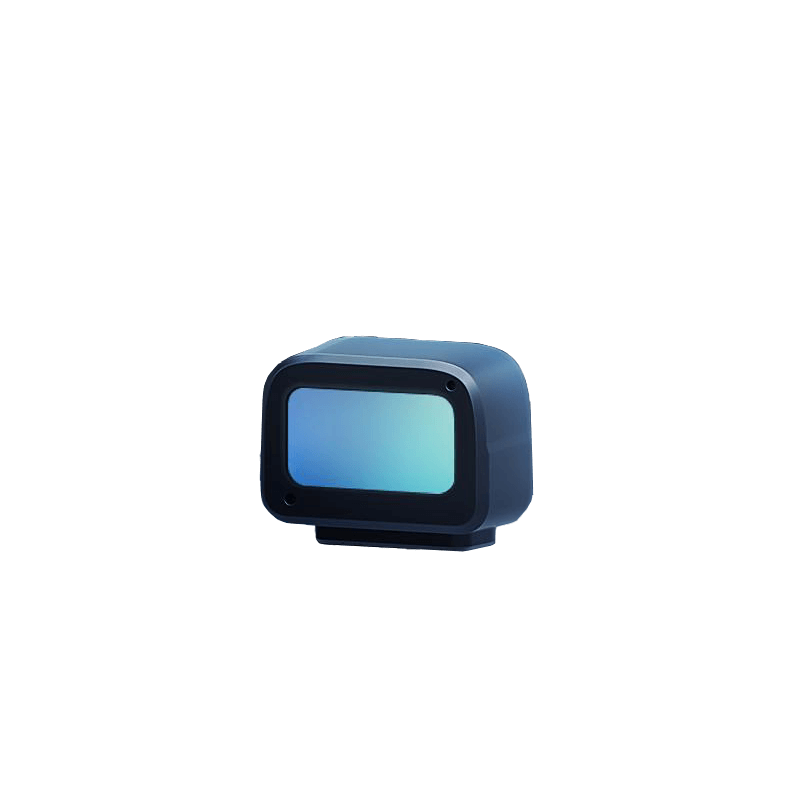
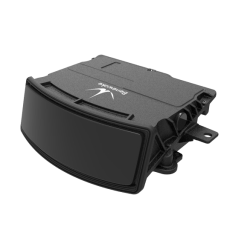
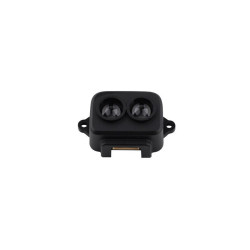
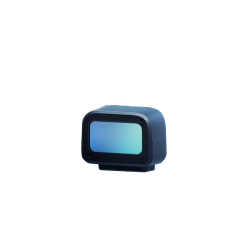
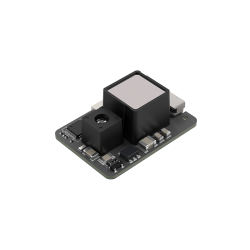
Benewake offers LiDAR sensors that utilize laser distance measurement for automation, robotics, UAVs, level and volume measurement, intelligent transportation, ADAS, and autonomous systems.
Benewake offers LiDAR sensors that utilize laser distance measurement for automation, robotics, UAVs, level and volume measurement, intelligent transportation, ADAS, and autonomous systems.
The offering includes simple single-point LiDAR rangefinders, 2D sensors, and advanced 3D scanners.
Products vary in range from a few meters to over 1 km for specialized single-point rangefinders.
Available interfaces include:
UART,
I²C,
CAN,
RS-232,
RS-485,
Ethernet,
Automotive Ethernet 1000BASE-T1,
GMSL,
digital I/O.
Depending on the model, the sensors are designed for integration directly with a microcontroller, an industrial computer, a robotic system, or an autonomous vehicle platform.
Typical applications listed by the manufacturer include:
robot navigation and obstacle avoidance,
AMRs and AGVs,
UAVs and drones,
height measurement and positioning,
material and liquid level measurement,
volume measurement,
space monitoring,
ADAS,
autonomous vehicles,
smart roads and intersections,
railways,
aviation,
IoT, and industrial automation.
Available Models – Single-Point Sensors
TF-UW500
Ultra-small, short-range sensor,
range over 5 m,
UART/I²C,
weight less than 5 g,
designed for OEM integration.
TF-NOVA
Compact single-point sensor,
Range approximately 14 m,
UART / I/O / I²C,
Measurement frequency up to approximately 900 Hz,
Weight less than 5 g.
TF-Luna
Range approximately 0.2–8 m,
UART / I/O / I²C,
Up to 250 Hz,
Power consumption up to approximately 0.35 W,
Weight less than 5 g.
TFmini-S
Range approximately 0.1–12 m,
UART / I/O / I²C,
Up to 1000 Hz,
IP65,
Weight approximately 5 g.
TFmini Plus
Range approximately 0.1–12 m,
UART / I/O / I²C,
Up to 1000 Hz,
IP65,
Weight approximately 12 g.
TFmini-i
Industrial version of the TFmini series,
Range approximately 0.1–12 m,
CAN or RS-485 communication,
IP65,
Designed for automation and industrial integration, among other applications.
TFS20-L
Very small OEM sensor,
Range approximately 0.2–20 m,
UART / I²C,
up to 250 Hz,
Weight approximately 1.35 g.
Mid-range sensors
TF02-Pro
Range approximately 0.1–40 m,
UART / I/O / I²C,
up to 1000 Hz,
IP65.
TF02-i
Range approximately 0.1–40 m,
CAN / RS-485,
IP65,
Designed more for industrial applications.
TF02-Pro-W
range approximately 0.1–25 m,
UART / RS-485 / I/O / I²C,
up to 1000 Hz.
Long-Range Sensors
TFA170-L
single-point sensor,
range up to approximately 170 m,
RS-232,
weight approximately 10 g.
TF03
range up to approximately 180 m,
UART / CAN / RS-232 / RS-485,
IP67,
measurement frequency up to approximately 9800 Hz.
TFA300 / TFA300-L
series of mid- and long-range rangefinders,
maximum range declared on the manufacturer's website up to approximately 290 m,
UART / CAN,
up to 10,000 Hz,
IP67,
very light weight approximately 10.5 g.
TF350
range approximately 0.2–350 m,
UART / CAN / RS-232 / RS-485,
IP67,
up to 1000 Hz.
Kilometer-Range Sensors
TFA1200-L
Range approximately 3–1200 m,
UART,
approximately 3 Hz,
weight approximately 11 g.
TFA1500-L
Range approximately 0.5–1500 m,
UART,
adaptive frequency approximately 60–800 Hz,
weight approximately 11 g.
2D LiDAR
NOVA20
Lightweight, multi-beam short-range LiDAR,
approximately 20 channels,
field of view approximately 40°,
UART,
OEM design without full housing,
weight less than 5 g.
VLS-H5
Specialized 360° underwater LiDAR,
Range above approximately 5 m in clear water,
360° scanning,
approximately 6 Hz,
UART,
IPX8,
can operate at depths of up to approximately 4 m,
intended for Applications include pool cleaning robots, mapping, localization, and obstacle avoidance.
TR Series
Classic 2D LiDAR scanning,
Maximum declared range of approximately 40 m,
Up to approximately 20 m for a target with 10% reflectivity, as described by the manufacturer,
10–30 Hz,
IP65,
Maximum point cloud density of approximately 40,000 points/s,
Primarily intended for SLAM, navigation, and obstacle avoidance by service and industrial robots.
3D LiDAR
LR10 Series
Short-range sensor combining LiDAR and a camera,
Range approximately 0.05–18 m,
10 fps,
Ethernet / GMSL / I/O,
IP67,
Weight approximately 460 g,
Intended primarily for industrial and mobile robots,
The manufacturer offers, among other things, an integrated obstacle avoidance algorithm,
Software for volume calculation is also available.
AD2-S-X3
High-performance 3D LiDAR intended for vehicles, transportation, and industrial applications,
The manufacturer's current website states a range of 300 m for a target with 10% reflectivity,
10 Hz,
Automotive Ethernet 1000BASE-T1,
IP67 / IP67 / IP6K9K,
Power consumption up to approximately 15 W,
Weight approximately 1.2 kg.
Horn-X2 Pro
Industrial long-range 3D LiDAR,
up to 300 m at 10% reflectivity,
FoV approximately 90° × 10–30°,
Adjustable angular resolution,
1–20 fps,
Gigabit Ethernet 1000BASE-T,
IP67,
Weighs up to approximately 3.8 kg,
Intended for applications including V2X, intelligent transportation, and infrastructure monitoring.
Horn-RT
3D LiDAR designed primarily for rail transport,
Range up to 300 m at 10% reflectivity,
FoV approximately 90° × 10–30°,
1–20 fps,
1000BASE-T,
IP67,
Weighs up to approximately 3.3 kg,
Designed for resistance to vibration, electromagnetic interference, and harsh environmental conditions.
Software Required for Operation
There is no single, mandatory Benewake software required for all sensors.
For most single-point sensors, the device can be directly integrated with:
a microcontroller,
a PLC,
a computer,
a robot controller,
an autopilot,
via a suitable communication interface.
The manufacturer's software is primarily used for:
configuration,
diagnostics,
visualization,
testing,
data recording,
creating custom applications.
TF Series PC Software
The manufacturer provides PC software for the TF family of sensors.
It is primarily intended for configuration and data visualization.
The official TFmini Plus manual indicates that the software runs on Windows and supports TF series products operating via the serial port protocol.
A suitable TTL-USB adapter may be required to connect the UART sensor to a computer.
The software is not necessary once the sensor has been integrated into the target control system.
Dedicated GUI
Benewake provides separate applications for some industrial products, such as:
-TFmini-i RS-485 GUI,
-TF02-i RS-485 GUI.
The manufacturer also publishes examples of integrating CAN sensors with ArduPilot / Pixhawk autopilots.
Benewake LiDAR Viewer – BLV
The Benewake LiDAR Viewer GUI is available for advanced 3D sensors.
For AD2, the application enables:
- real-time point cloud display,
- data recording,
- data playback,
- saving to PCD, CSV, and PCAP, among others.
The manufacturer recommends Windows 10 or later for this tool.
SDK
Benewake provides an SDK – Software Development Kit – for integrating some of its advanced products.
The manufacturer describes the SDK as a cross-platform solution.
The SDK is a development tool and is not necessary if the system receives data directly via a documented device protocol.
ROS
The manufacturer provides support for the Robot Operating System (ROS) for some products.
This is particularly important in robotics, SLAM, autonomous navigation, and research.
Advanced 3D sensors can be integrated with Windows, Linux/Ubuntu, and ROS.
Benewake offers LiDAR sensors that utilize laser distance measurement for automation, robotics, UAVs, level and volume measurement, intelligent transportation, ADAS, and autonomous systems.