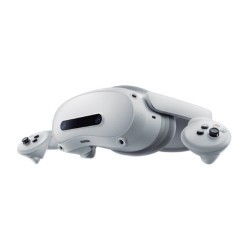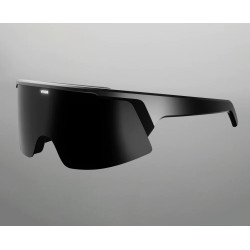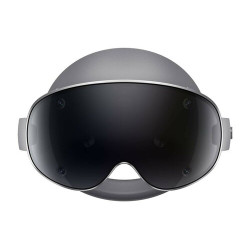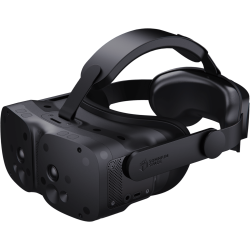
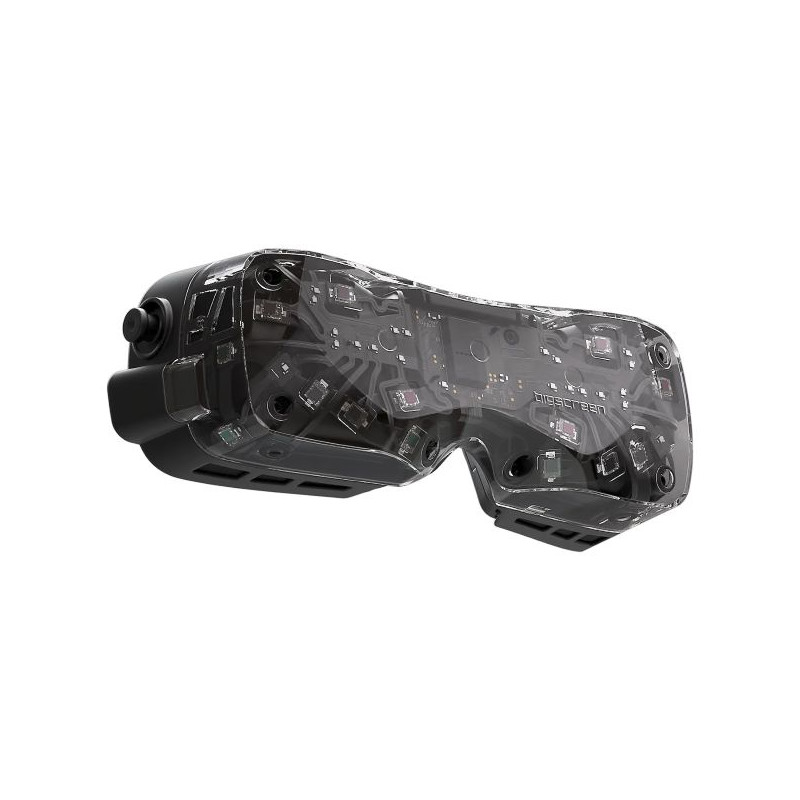
Bigscreen Beyond 2 is a wired virtual reality headset designed for use with a PC and the SteamVR platform. The device weighs only 107 g and uses two micro-OLED displays with a resolution of 2560 × 2560 pixels per eye. Its redesigned optical system provides a wide field of view, high image clarity and independent interpupillary distance adjustment for each eye
Bigscreen Beyond 2 – Ultra-Lightweight PC VR Headset
Bigscreen Beyond 2 is a wired virtual reality headset designed for use with a PC and the SteamVR platform. The device weighs only 107 g and uses two micro-OLED displays with a resolution of 2560 × 2560 pixels per eye. Its redesigned optical system provides a wide field of view, high image clarity and independent interpupillary distance adjustment for each eye.
Advantages
– Extremely low weight – only 107 g without the head strap and additional accessories.
– High resolution of 2560 × 2560 pixels per eye.
– Micro-OLED displays providing deep blacks, high contrast and very good rendering of dark scenes.
– Wide field of view: 116° diagonal, 108° horizontal and 96° vertical.
– High image clarity of up to 32 pixels per degree, or PPD.
– Independent IPD adjustment for the left and right eye.
– Precise, low-latency tracking based on the SteamVR Lighthouse system.
– Support for prescription lens inserts.
– Built-in stereo microphones.
– A design well suited to long sessions, simulators and seated applications.
Disadvantages
– The headset is not a standalone device and requires a Windows PC and the SteamVR platform.
– The connection to the computer is wired. The system uses a five-metre fibre-optic cable and a Link Box.
– External SteamVR 1.0 or 2.0 base stations are required for positional tracking and are not included as standard.
– VR controllers must also be purchased separately.
– The standard configuration does not include integrated headphones. The Audio Strap with built-in speakers is available as an optional accessory.
– IPD adjustment is performed using the supplied adjustment tool, which may be less convenient in environments where multiple users frequently share the same headset.
– The maximum refresh rate is 90 Hz, which may be a limitation for applications requiring 120 Hz or higher.
– The Beyond 2 model does not include eye tracking. This feature is available in the separate Beyond 2e version.
– The hardware requirements and additional system components make it less suitable as a simple entry-level VR solution.
Applications
– PC VR games and applications available through SteamVR.
– Flight, automotive, railway and machinery simulators.
– Procedural training and equipment operation training.
– Visualisation of 3D projects, CAD models, architecture and digital twins.
– Product, prototype and industrial project presentations.
– Virtual meetings, events and social environments.
– Research involving visual perception, ergonomics, human-machine interfaces and presence in virtual environments.
– Training simulations for industry, transport, public safety and defence.
Suitability for Consumers
– High suitability for VR enthusiasts who already own a powerful computer, SteamVR base stations and compatible controllers.
– Particularly suitable for simulators, applications requiring clear instrument visibility and long VR sessions.
– Lower suitability for beginners who expect a complete, wireless system that operates without a computer.
Suitability for Education
– Medium to high suitability for specialist educational facilities, including technical, medical, aviation and engineering laboratories.
– The low weight of the headset may improve comfort during longer lessons and training sessions.
– The high resolution supports the presentation of small details, text, anatomical models and technical structures.
– Less suitable for standard classrooms and mobile educational kits due to the cable, required computer, base stations and the need to adjust the headset for individual users.
Suitability for Laboratories and Research
– High suitability for visualisation, simulation and research involving interfaces and perception, particularly where low weight and high image quality are important.
– It can be used in research stations based on SteamVR and Lighthouse tracking.
– The standard Beyond 2 is not suitable for studies requiring gaze-direction recording. For such projects, the Beyond 2e version with eye tracking should be considered.
– The manufacturer does not present Beyond 2 as a certified medical device or measurement instrument. Its use in research therefore requires independent validation of the complete test environment.
Suitability for Military and Public-Safety Applications
– Good suitability for stationary simulation systems, including training for drivers, machine operators, vehicle crews, pilots and technical personnel.
– The low weight may help reduce user fatigue during extended training sessions.
– The high resolution is beneficial when reading indicators, maps, control panels and cockpit elements.
– Precise SteamVR tracking can be useful in dedicated simulation rooms.
– Limited suitability for field deployment due to the wired connection, dependence on a computer and the requirement for external base stations.
– The manufacturer does not specify compliance with military standards, an IP protection rating, or resistance to dust, moisture or impact. The headset should therefore be treated as a component of a training or simulation system rather than as field equipment.
Suitability for Industry and Design
– High suitability for design reviews, CAD visualisation, digital twins and workstation simulations.
– Particularly useful where users need to see small model details, markings and indicators.
– The system is best suited to a fixed design, engineering or training workstation with a prepared SteamVR tracking environment.
Technical Specifications
– Device type: wired PC VR headset.
– Platform: SteamVR.
– Displays: 2 × micro-OLED.
– Resolution: 2560 × 2560 pixels per eye; 5120 × 2560 pixels in total.
– Refresh rate: 75 Hz or 90 Hz.
– Contrast ratio: 500,000:1.
– Maximum pixel density: 32 PPD.
– Field of view: 116° diagonal, 108° horizontal and 96° vertical.
– IPD adjustment: independent adjustment for each eye.
– Physical IPD range: 53–70 mm.
– Optically compensated range: 48–75 mm.
– Positional tracking: SteamVR Lighthouse.
– Supported base stations: SteamVR Base Station 1.0 and 2.0.
– Eye tracking: no; available in the separate Beyond 2e model.
– Weight: 107 g for the headset itself.
– Dimensions according to the manufacturer: 143.1 × 52.4 × 24–49.2 mm.
– Microphone: built-in stereo microphones.
– Speakers: available through the optional Audio Strap.
– Accessory port: 1 × USB-C operating at USB 2.0 speed.
– Computer connection: 1 × DisplayPort 1.4 and 2 × USB 3.0 through the Link Box.
– Cable: five-metre fibre-optic cable.
– Operating system: Windows 10 or Windows 11.
– Minimum processor: quad-core Intel or AMD processor.
– Minimum RAM: 16 GB.
– Minimum graphics card: NVIDIA GeForce RTX 2070 or AMD Radeon RX 5700 XT.
– Graphics card requirements: DisplayPort 1.4 and DSC, or Display Stream Compression, support.
– Components required separately: SteamVR base stations, controllers and, depending on the configuration, an audio system and prescription lens inserts.
Bigscreen Beyond 2 is a wired virtual reality headset designed for use with a PC and the SteamVR platform. The device weighs only 107 g and uses two micro-OLED displays with a resolution of 2560 × 2560 pixels per eye. Its redesigned optical system provides a wide field of view, high image clarity and independent interpupillary distance adjustment for each eye