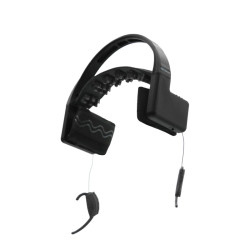
The MindRove Arc 2 is a portable, wireless EEG (electroencephalography) system designed for recording electrical brain activity and research applications related to BCI (Brain-Computer Interface), evoked potentials, neurofeedback, and motor cortex activity studies.
The system provides access to raw EEG data, allowing users to conduct their own signal analysis and integrate the device with their own research applications.
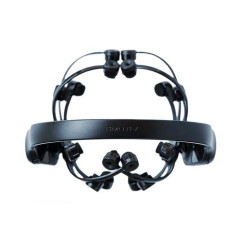
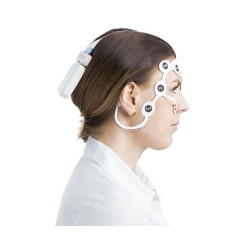
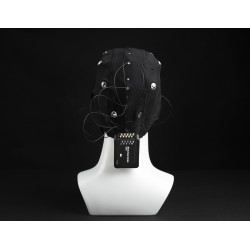
The Arc 2 utilizes a configuration of 6 active EEG channels, plus a reference electrode and a bias electrode, concentrated over the central part of the head, particularly over the motor cortex.
Mindrove Arc2
The MindRove Arc 2 is a portable, wireless EEG (electroencephalography) system designed for recording electrical brain activity and research applications related to BCI (Brain-Computer Interface), evoked potentials, neurofeedback, and motor cortex activity studies.
The system provides access to raw EEG data, allowing users to conduct their own signal analysis and integrate the device with their own research applications.
The Arc 2 utilizes a configuration of 6 active EEG channels, plus a reference electrode and a bias electrode, concentrated over the central part of the head, particularly over the motor cortex.
The semi-dry electrodes used do not require the use of traditional EEG gel; the manufacturer claims system setup time is less than one minute. The device is also equipped with a 6-axis IMU (Inertial Measurement Unit) module, which includes a 3-axis gyroscope and a 3-axis accelerometer, enabling simultaneous recording of head movements.
Data is transmitted wirelessly to a computer via Wi-Fi Direct, allowing for real-time transmission of EEG and IMU data.
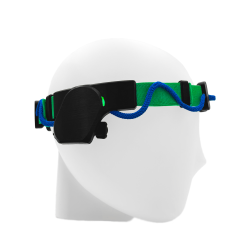
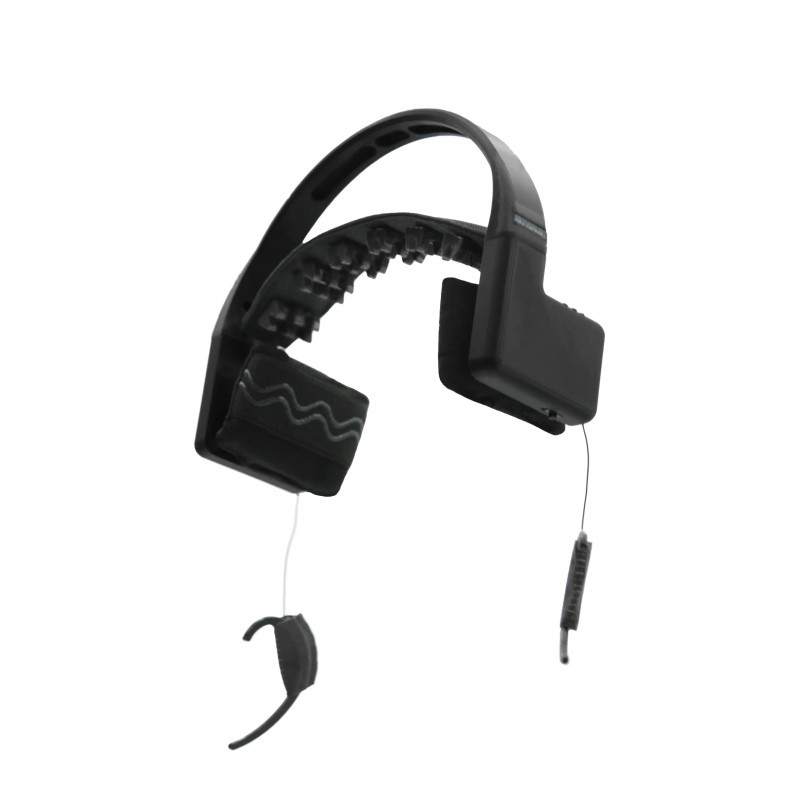
The headband's design utilizes an elastic strap, soft, replaceable cushions, and additional electrode stabilizers, facilitating customization for various users.
Technical Specifications
Device Type: Portable, Wireless EEG Headset.
Number of EEG Electrodes: 6 + 2.
Active EEG Measurement Channels: 6.
Electrode Location: C5, C3, C1, C2, C4, C6.
Reference Electrode: Behind the Right Ear.
Bias Electrode: Behind the Left Ear.
Electrode Type: Semi-Dry – No EEG Gel Required.
Electrode Material: Conductive Fabric with Platinum Fibers/Threads.
EEG Sampling Rate: 500 Hz.
Transducer Resolution: 24-bit.
EEG Signal Bandwidth: 0–250 Hz.
Access to Raw EEG Data: Yes.
Electrode Contact Quality Monitor: Yes.
IMU: 3-axis Gyroscope + 3-axis Accelerometer. Gyroscope range: ±500°/s.
Accelerometer range: ±2 g.
IMU sampling rate: 50 Hz.
Raw IMU data access: yes.
Connectivity: Wi-Fi, device-to-PC.
Operating time: approximately 4–6 hours.
Battery: Rechargeable Li-Po (lithium polymer).
Charging port: microUSB.
Fit: Elastic headband and interchangeable stabilizing pads.
Software Required/Available
MindRove SDK – a basic software development package enabling communication with the device, receiving, and analyzing data from MindRove biosensors. The SDK provides a common API for the manufacturer's devices.
Supported SDK operating systems: Windows, macOS, and Linux.
Supported programming languages: C++, C#, Python, and MATLAB.
MindRove Visualizer – a Windows application enabling real-time signal viewing, data logging to CSV files, and filtering.
Lab Streaming Layer (LSL) – a supported real-time data transmission interface, useful for synchronizing EEG with other devices and experimental software.
The SDK can also be used to create custom applications and integrate with other research environments. The MindRove documentation includes examples for Python, MATLAB, C++, and C#, as well as integration with Unity, Unreal Engine, and CryEngine.
Intended Use
BCI research – Brain-Computer Interface, i.e., control or communication between brain activity and a computer system;
motor cortex activity research;
experiments using motor imagery, i.e., imagining movement without physically executing it; the manufacturer indicates Arc 2 as a platform specifically designed for this type of research;
recording and analysis of evoked potentials;
neurofeedback;
scientific and educational research requiring access to raw EEG signals;
creating custom applications that analyze or utilize EEG signals;
experiments requiring simultaneous analysis of EEG and head movement thanks to the built-in IMU;
integration of EEG data with other data sources via the Lab Streaming Layer.
Advantages
Quick preparation for measurement – the manufacturer states a setup time of less than 1 minute;
Semi-dry electrodes without gel, simplifying device application and subsequent cleaning compared to traditional wet-EEG systems;
access to raw EEG data, important for scientific applications and the development of custom algorithms;
24-bit resolution and 500 Hz sampling;
Simultaneous recording of EEG and IMU movement data;
Wireless Wi-Fi Direct transmission, reducing the need for cables between the subject and the computer;
Electrode contact quality monitoring, facilitating accurate measurement preparation;
Cross-platform SDK for Windows, macOS, and Linux;
Support for popular research and development environments: Python, MATLAB, C++, C#;
Option to use the LSL standard, particularly useful in experiments requiring synchronization of multiple data streams;
A design focused on the central head area and motor cortex, making the Arc 2 particularly interesting for BCI and movement-related experiments;
A flexible headband, soft cushions, and additional electrode stabilization improve comfort and maintain contact during testing.
Important Information
The manufacturer expressly states that MindRove devices are not intended to diagnose, treat, or prevent disease. The Arc 2 should therefore be considered primarily as a research/development device and not a certified medical diagnostic system.
The MindRove Arc 2 is a portable, wireless EEG (electroencephalography) system designed for recording electrical brain activity and research applications related to BCI (Brain-Computer Interface), evoked potentials, neurofeedback, and motor cortex activity studies.
The system provides access to raw EEG data, allowing users to conduct their own signal analysis and integrate the device with their own research applications.
The Arc 2 utilizes a configuration of 6 active EEG channels, plus a reference electrode and a bias electrode, concentrated over the central part of the head, particularly over the motor cortex.