
Snap unveils Specs. The new AR glasses aim to bridge the gap between smartphones and a “computer on your face”
Snap has officially unveiled its latest augmented reality glasses, Specs. Presented at Augmented World Expo 2026, the device is intended to be the company's first consumer AR model and, at the same time, its most ambitious attempt to bring experiences familiar from Snapchat, artificial intelligence and spatial applications directly into the user's field of view.
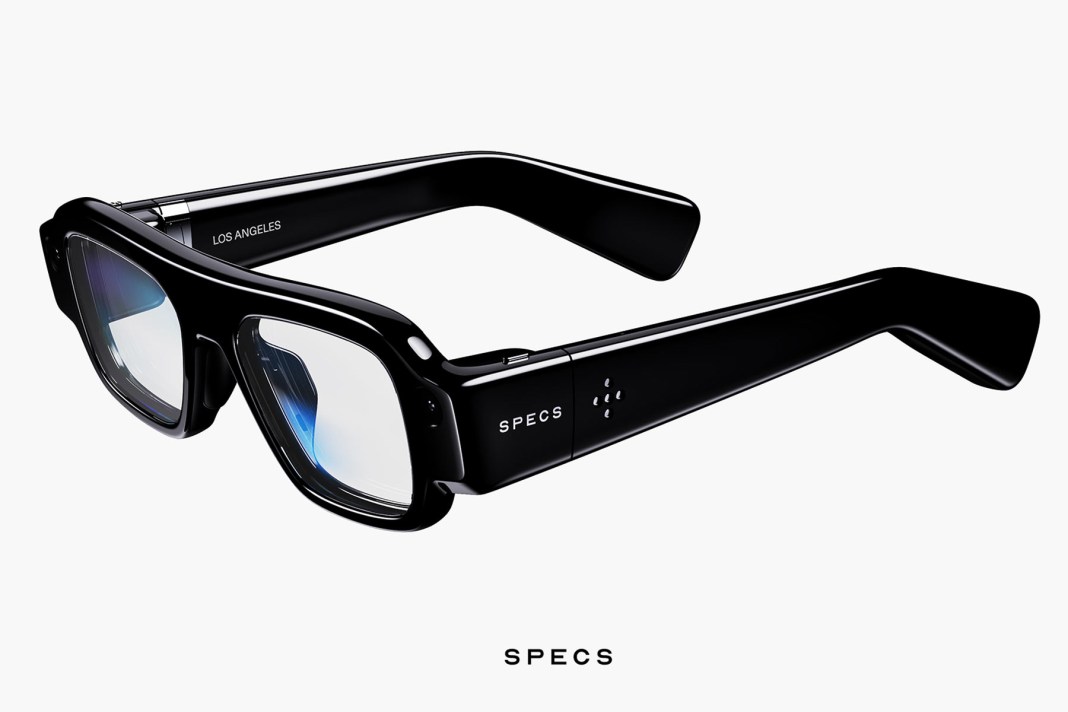
The new Specs are not conventional smart glasses with a camera and speakers. Snap positions them as standalone AR glasses that do not require an external computing module, cable or additional “puck.” All the electronics are housed within frames that will be available in two sizes. The smaller version weighs 132 grams and the larger 136 grams. That is still significantly more than typical glasses, but clearly less than earlier developer versions of Spectacles.
The key component of Specs is an AR display based on proprietary LCoS technology. The glasses offer a 51-degree field of view and support for 16 million colors. Snap compares the effect to a private work screen or a large cinema screen visible in the space in front of the user. The lenses are transparent and, thanks to electrochromic technology, can change from clear to tinted in approximately 10 seconds, making the device easier to use both indoors and outdoors.
The glasses are powered by two Qualcomm Snapdragon processors. One is intended to handle environmental understanding and computer vision, while the other runs AR applications, which Snap calls Lenses. The company emphasizes fast hand tracking, low latency and stable anchoring of digital objects in the real world. The stated motion-to-photon latency is 7 ms.
Specs are expected to offer up to 4 hours of operation in mixed-use mode, including audio and video playback, AI features, Bluetooth notifications and AR applications. A charging case will be included, extending the total operating time to approximately 20 hours.
Artificial intelligence is a major part of Snap's strategy. The company describes Specs as a device in which AI is not confined to a chat window, but “sees” what the user sees, understands the context and can provide assistance at a specific place and time. In practice, this could mean navigation displayed directly in the surrounding space, object measurements, work instructions, educational AR overlays or shared experiences with other users.
Snap is also trying to address the biggest privacy concerns. The glasses are expected to use on-device processing, request access to sensitive data and inform people nearby when recording is taking place through an LED indicator. This matters because face-worn devices with cameras have raised questions for years about the privacy of people in the wearer's vicinity.
Specs are priced at USD 2,195. Preorders have already begun, and shipping is scheduled to start in autumn 2026. Initially, the device will be available in the United States, the United Kingdom and France.
Snap's biggest challenge, however, will not be the technology itself but convincing the market that consumers are ready to pay more than two thousand dollars for first-generation AR glasses. Specs are lighter and more complete than earlier developer headsets, but they remain a product for enthusiasts, creators and early adopters. If Snap succeeds in building a sufficiently compelling app ecosystem, however, Specs could become one of the most important tests of whether augmented reality can move beyond technology demonstrations and into everyday use.
20.06.2026
Snap Specs, AR glasses, augmented reality glasses, Snap, Spectacles, AR glasses, smart glasses, augmented reality, artificial intelligence, AI in glasses, augmented reality, spatial computer, spatial computing, Lenses, Snapchat, Snapdragon, AR display, hand tracking, voice commands, computer vision, Snap Specs 2026, Snap Specs launch, Snap Specs price, AR glasses 2026, consumer AR glasses, new Snap glasses, Snap Specs preorder, Snap Specs, AR glasses, augmented reality, smart glasses, Snap, Spectacles, AI, spatial computing, Snapchat, augmented reality glasses, Snap Specs 2026, wearable technology,