
Anduril EagleEye – military augmented reality in a soldier's helmet
Anduril EagleEye is one of the most interesting announcements in the fields of military augmented reality, artificial intelligence and the digital battlefield. It is neither an ordinary night-vision device nor a conventional helmet fitted with a display. Anduril presents EagleEye as an entire family of modular soldier systems intended to combine digital imaging, threat detection, command, communications and cooperation with unmanned systems in a single head-worn environment.
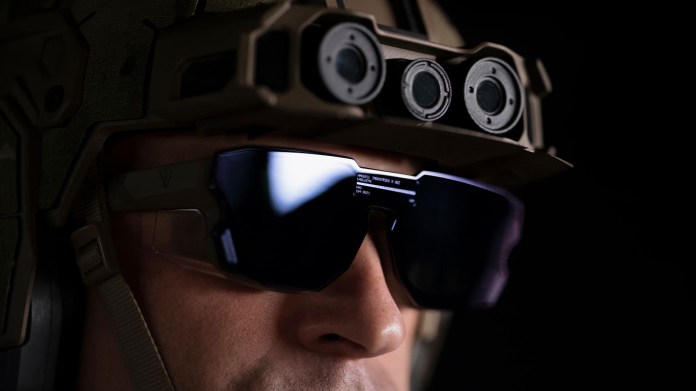
At the heart of the concept is the Lattice platform, Anduril's system for combining data from multiple sensors, sources and devices. In practice, EagleEye is intended to act as a personal combat interface—the soldier not only sees the surroundings but also receives an additional layer of information: threat markers, location data, tactical information, sensor imagery and mission-related messages.
One of EagleEye's most important features is digital night vision. According to information reported by Road to VR, the system offers an 84-degree field of view, a 4K display image and stereo thermal image fusion. This is a significant difference compared with traditional night-vision goggles, which have provided an advantage in night operations for years but have also restricted the field of view, added weight to the front of the helmet and provided a relatively narrow range of information.
Anduril presents EagleEye as a solution closer to a digital perception system than to a traditional night-vision device. Low-light and thermal sensors can be integrated into a sensor package mounted on the helmet, with the image then sent to a display in AR glasses or a visor. This architecture is intended to reduce the problem of excessive weight at the front of the head and improve ergonomics compared with conventional systems suspended directly in front of the eyes.
EagleEye is also expected to use data from external sources. This means that the soldier is not merely a user of a personal night-vision device but becomes part of a network of connected sensors, observation systems, unmanned platforms and command tools. In such a model, the helmet-mounted display can show not only what is directly in front of the soldier but also information from other devices operating in the mission area.
In the broader context, EagleEye is part of the competition to shape the future of next-generation soldier systems. The project is connected to US military mixed reality modernization programs, including successors to the IVAS program originally associated with Microsoft and HoloLens. Anduril is seeking to show that new generations of military AR systems should not merely adapt civilian headsets but should be designed from the outset as combat solutions: rugged, modular and integrated with helmets, sensors, communications and ballistic protection.
Technology partnerships are also important. Companies such as Meta, Oakley Standard Issue, Qualcomm and Gentex are involved in the development of the EagleEye ecosystem. Each contributes different expertise, ranging from AR technology and displays through optics and protective components to computing chips and integration with helmet equipment.
EagleEye's greatest promise is to shorten the time between detecting a threat, understanding the situation and making a decision. Traditionally, soldiers have had to use many separate tools: night-vision goggles, radios, maps, tablets, positioning systems and information from drone operators. EagleEye attempts to bring these functions together in one interface that can be accessed without looking away from the surroundings.
This does not mean, however, that the technology is free of challenges. Military AR and MR systems must address issues of weight, power consumption, display latency, resistance to field conditions, cybersecurity, reliability and information overload. On the battlefield, additional information can provide an advantage, but only if it is presented clearly and quickly without distracting the soldier.
Anduril EagleEye shows the direction in which modern military equipment is moving: from individual devices worn by soldiers toward an integrated, networked perception and command system. If the concept proves successful in practice, the helmet of the future will no longer merely protect the head. It will become a center for data, vision, communication and collaboration between humans, algorithms and autonomous systems.
20.06.2026
Source: Anduril, Road to VR
#Anduril #EagleEye #MilitaryAR #AugmentedReality #DefenseTech #AI #BattlefieldAwareness #DigitalNightVision #Lattice #FutureSoldier #DefenseInnovation #MixedReality #CyberDefense #MilitaryTechnology #SensorFusion
Anduril EagleEye, EagleEye, Anduril, military augmented reality, AR for the military, military augmented reality, AR helmet, digital battlefield, future soldier, military AR, digital night vision, digital night vision, digital night vision, stereo thermal imaging, thermal fusion, sensor fusion, AI-enhanced vision, artificial intelligence on the battlefield, Lattice system, battlefield awareness, threat detection, modern soldier equipment, future soldier systems, military wearables, situational awareness, command and control, C2, battlefield systems, tactical AR systems, sensor integration, unmanned military systems, IVAS, SBMC, Microsoft HoloLens, PVS-31, military night-vision device, night-vision goggles, mixed reality military, XR for the military, Meta military AR, Qualcomm, Gentex, Oakley Standard Issue, what is Anduril EagleEye, how Anduril EagleEye works, Anduril EagleEye military AR helmet, EagleEye digital night vision, Anduril EagleEye 84-degree field of view, future military augmented reality, AR and AI on the battlefield, modern future-soldier helmet, digital night vision with thermal imaging, EagleEye Anduril Lattice system,