
Raven Prism Smart Glasses: glasses that aim to be a computer always close at hand
Raven Resonance has announced Raven Prism—smart glasses described by the manufacturer not just as smart glasses, but as an “ambient computer,” a computer operating in the background of everyday activities. The device is expected to reach the market later in 2026 and is aimed primarily at technical creators, programmers, designers, makers and people who need quick access to information without taking their hands away from their work.
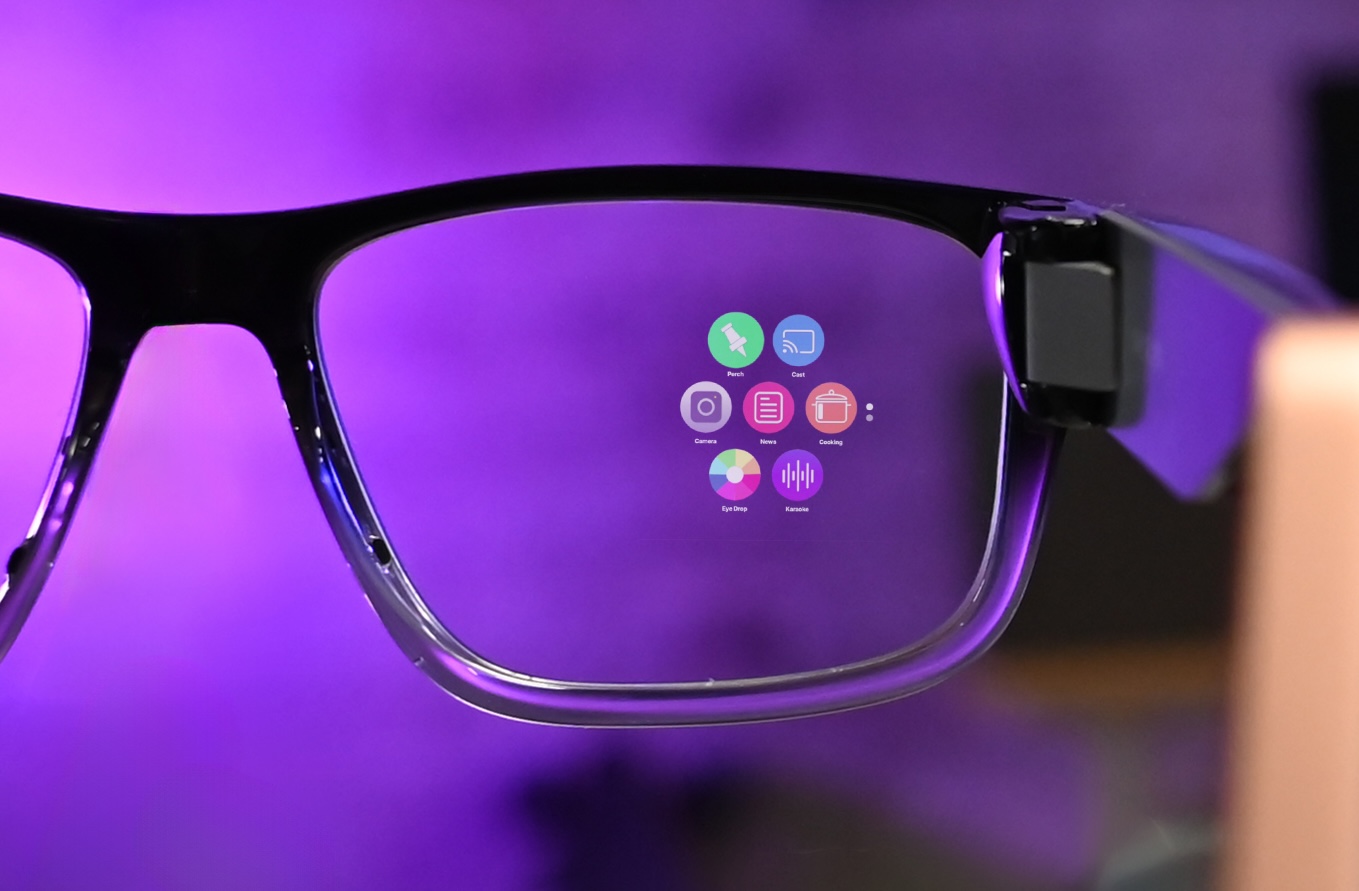
Raven Prism glasses feature a color display, the Linux-based RavenOS system and the ability to run applications directly on the device. According to the manufacturer, the screen is intended to create the impression of working with an image comparable in size to a 16-inch MacBook viewed at arm's length. The SDK documentation also specifies a resolution of 720 × 720 pixels, a 30-degree field of view and a single, right-side waveguide display.
The main concept behind Raven Prism is hands-free operation. The interface is intended to be controlled by gaze and voice, allowing users to access prompts, reference materials, notes, instructions or applications when their hands are occupied—for example, while working at a computer, playing an instrument, cooking, walking or performing technical tasks.
Technically, Raven Prism is expected to use a 64-bit ARM processor, mobile RAM and storage. The manufacturer states that applications will be able to run locally, from video streaming to local language models. The device is expected to support Wi-Fi and Bluetooth and, thanks to its open ecosystem and SDK, is also intended to be developed by the programming community.
An interesting design feature is Raven Wings—hot-swappable batteries intended to allow the power source to be replaced without turning off the device. After replacement, applications are expected to resume where the user left off. This is important because Raven positions Prism as a device for all-day wear.
The company also strongly emphasizes privacy. Raven Prism is expected to have a physical camera cover that must be removed manually before use. In addition, Beakon LEDs are intended to clearly indicate to people nearby that the camera is active. The manufacturer also states that access to sensors and data transmission to AI models will require the user's consent, while sensitive data will be protected through measures including secure enclaves.
Raven Resonance develops hardware and software in its laboratory in San Francisco. Prototype batches are expected to be designed, assembled, tested and shipped from the United States, although some components come from external partners.
Raven Prism fits into the growing trend of AI-supported wearable devices, but the company is trying to differentiate it from typical AR glasses. Instead of full immersion in a digital world, it focuses on a calm, discreet interface that appears when needed and disappears when the user returns to normal work.
For now, Raven is showing prototype hardware and making the first elements of its ecosystem available to developers. Details about price, final availability and the complete commercial configuration are expected to be disclosed closer to launch.
20.06.2026
Source: Raven Resonance
Raven Prism, Raven Prism Smart Glasses, smart glasses, smart glasses, AI glasses, wearable technology, wearables, ambient computing, wearable computer, augmented reality, AR glasses, augmented reality, RavenOS, Linux, AI glasses, artificial intelligence, local AI models, voice control, eye tracking, voice control, gaze control, hands-free computing, waveguide display, LCOS display, replaceable batteries, hot-swappable battery, Raven Wings, technology startup, hardware startup, new technologies, the future of computers, the future of work, productivity, personal computers, mobile devices, San Francisco technological innovations, Raven Prism smart glasses, Raven Prism Smart Glasses launch, Raven AI glasses, smart glasses with AI, AR glasses with Linux, computer in glasses, smart glasses 2026, augmented reality glasses, Raven Resonance, RavenOS