
AI and AR glasses – a review of technologies, manufacturers and smart features. Will we wear the computers of the future on our noses?
Real-time conversation translation, captions displayed before your eyes, artificial intelligence assistants, image recognition and navigation without looking at a phone. Smart AI glasses are changing the way we use digital information. More and more manufacturers are developing devices that resemble traditional eyeglass frames but contain microphones, cameras, miniature displays and artificial intelligence functions.
Technology companies from China are developing particularly rapidly, introducing successive generations of AI and AR glasses. We examine their solutions, key features, technical specifications, support for the Polish language and software capabilities.
What exactly are AI glasses?
AI glasses (Artificial Intelligence Glasses) are head-worn devices in which artificial intelligence helps analyze information, process speech, interpret images or answer users' questions.
However, not all AI glasses work in the same way.
AI glasses without a display resemble conventional frames with built-in earphones, microphones and sometimes a camera. They can play music, make phone calls, take photos, translate speech and communicate with a voice assistant. However, they do not display information directly on the lenses.
AI glasses with a HUD (Head-Up Display) present information within the field of view. Users can see conversation transcripts, translations, navigation instructions, notifications or a previously prepared speech script without taking their phones out of their pockets.
AR (Augmented Reality) glasses use optical solutions to overlay digital content onto the view of the real surroundings. More advanced devices offer color displays, applications, multimedia and independent data processing.
In practice, the boundaries between these categories can be blurred. Some products marketed as AR Glasses offer only a simple text display.
A review of selected smart AI glasses
1. INMO – AIR3 and GO3: from a standalone AR computer to a personal translator
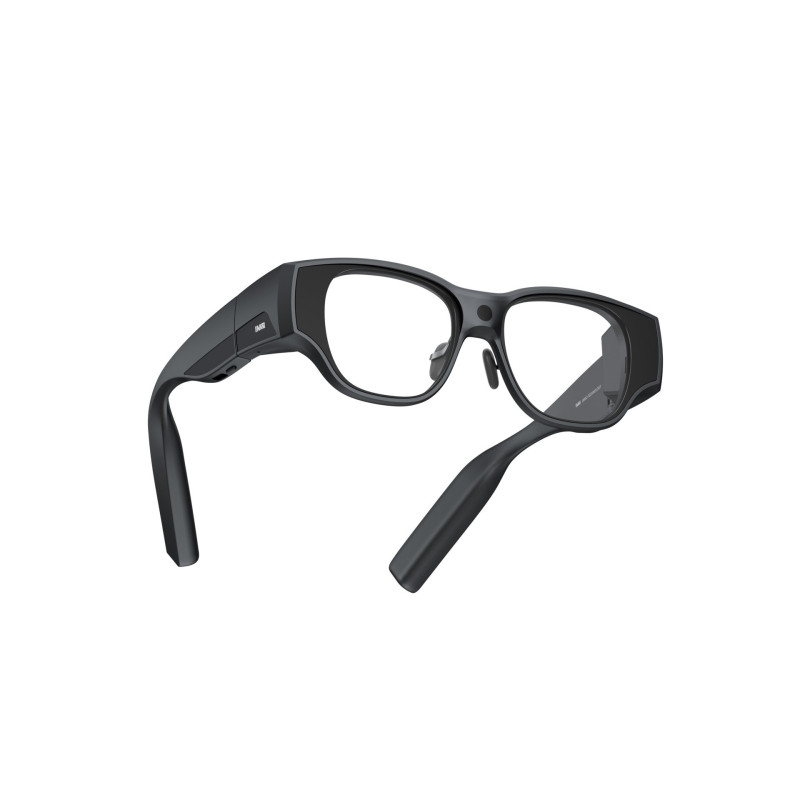
Manufacturer: Shenzhen INMO Technology Co., Ltd., Shenzhen, China.
INMO is developing two different concepts of smart glasses: autonomous AR devices and lightweight glasses supporting everyday communication.
INMO AIR3 are advanced AR glasses that can work without a constant connection to a phone. They feature a Qualcomm Snapdragon processor, 8 GB RAM, 128 GB internal storage, a 16 MP camera, microphones and speakers.
Two color Micro-OLED displays offer 1920 × 1080-pixel resolution and a 36° field of view. The glasses run IMOS 3.0 based on Android 14.
Users can run Android applications, watch multimedia, use a browser, take photos, make video calls and experiment with AI applications.
Polish language: the global version can use translation applications that support Polish, such as Google Translate. However, a fully Polish-language IMOS interface has not been confirmed.
Software: IMOS 3.0, Android applications, Google Play in the global version and INMO developer tools.
Important safety information: on September 24, 2026, the US CPSC announced a recall of certain INMO AIR3 units due to a risk of overheating in the left temple arm. Before using the device, verify whether the particular unit is affected and whether the required corrective action has been completed.
INMO GO3 represent a different category. These glasses have two monochrome Micro-LED displays and are intended primarily for translation, captions, presentations and AI assistant use.
Key specifications:
weight approximately 58 g;
resolution 640 × 480 pixels;
field of view 30°;
maximum brightness 1500 nits;
four microphones and two speakers;
replaceable 270 mAh battery;
64 GB data storage.
The manufacturer claims online translation into more than 98 target languages, caption display, a teleprompter, automatic meeting summaries and navigation.
Polish language: availability of individual Polish-language functions must be checked in the current version of the INMO GO3 App. Polish is not on the official list of nine basic offline translation languages.
Software: RTOS and a dedicated INMO GO3 app for Android and iOS.
2. Even Realities Even G2 – smart information without a camera
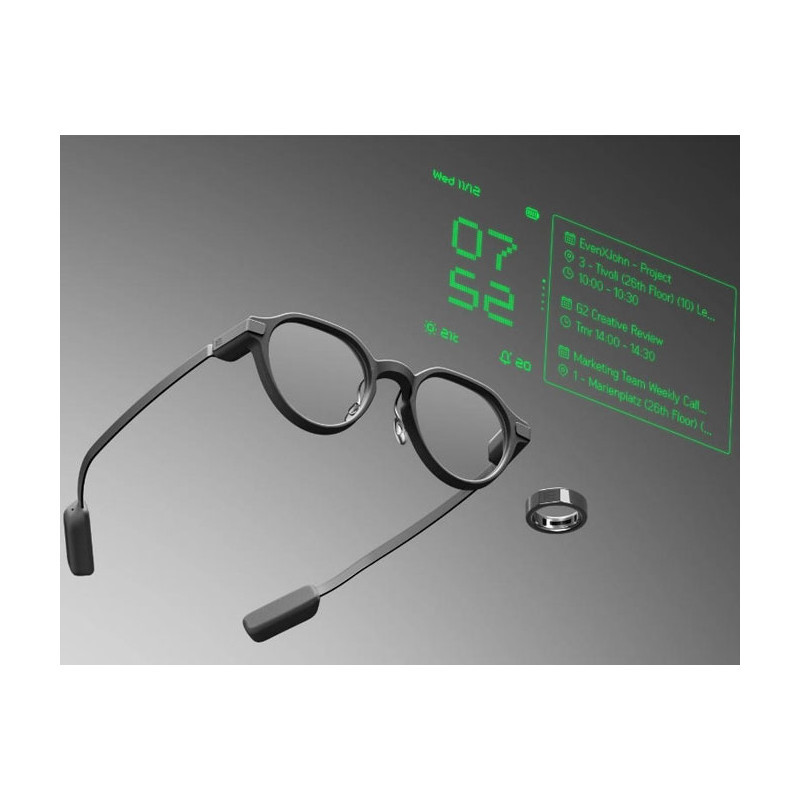
Origin: manufacturer Even Realities Ltd. lists Shenzhen, China. The brand also operates through international entities, including Even Realities GmbH in Germany.
Even G2 is an example of smart glasses designed around discreet information display. They have neither a camera nor speakers.
The image visible to both eyes presents captions, translations, notes, a calendar, navigation directions and AI assistant responses.
Key functions include Conversate for conversation transcription, Translate for language translation, Teleprompt for presenters and Even AI.
Specifications include:
weight approximately 36 g;
two green Micro-LED displays;
resolution 640 × 350 pixels;
field of view 27.5°;
brightness up to 1200 nits;
Bluetooth LE 5.4;
four microphones;
IP65 protection;
declared battery life of up to two days of typical use.
Polish language: the manufacturer officially confirms display of Polish characters and support for Polish in translation functions. This does not mean complete Polish localization of the application and all AI extensions.
Software: Even Realities App, Even Hub and manufacturer-updated firmware.
3. LLVision Leion Hey 2 – real-time translation and captions
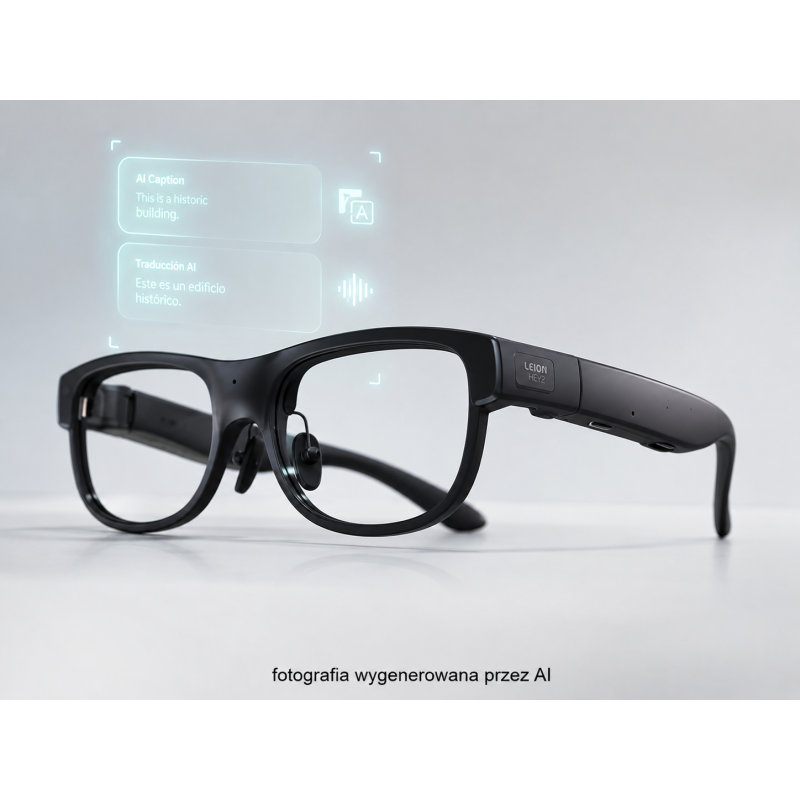
Manufacturer: LLVision, China.
Leion Hey 2 are AR glasses specializing in speech recognition and displaying translations directly before the eyes.
Applications include international business meetings, travel, conferences and communication with speakers of other languages. They may also support speech reception for people with hearing difficulties, although they do not replace medical devices.
Key functions:
live conversation translation;
caption display;
meeting transcription;
teleprompter;
summary generation;
AI-powered questions and answers.
The glasses weigh approximately 49 g. They use four microphones, a see-through display and a dedicated LEION app.
The manufacturer claims support for more than 100 languages and accents, translation latency below 500 ms under specified conditions and up to eight hours of operation per charge.
Polish language: it is officially listed among the languages supported by the translation system. Service availability may depend on the language package and available features.
Software: LEION mobile app. Availability of all offline features, particularly for Polish, requires separate confirmation.
4. Rokid – smart glasses with and without a display
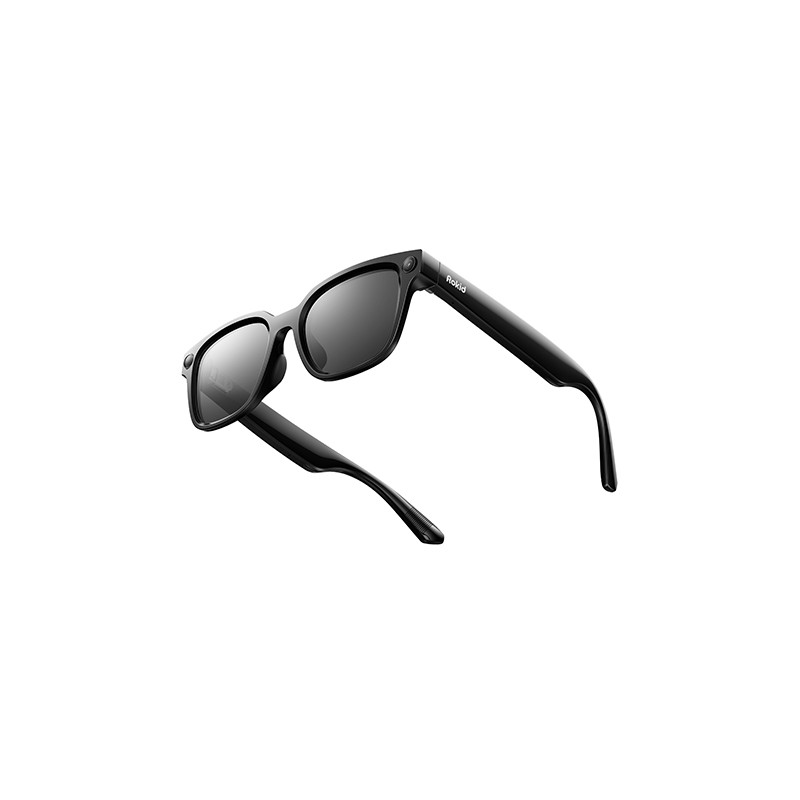
Manufacturer: Rokid, China.
Rokid develops glasses for communication, photography, AI interaction and information display.
The Rokid AI family includes both display-equipped models and versions that primarily use a voice interface.
Rokid Glasses with a display offer:
Qualcomm Snapdragon AR1 Gen 1 chipset;
2 GB RAM and 32 GB internal storage;
green Micro-LED display;
resolution 480 × 640 pixels;
field of view 30°;
12 MP camera;
four microphones;
two open-ear speakers;
Bluetooth and Wi-Fi.
The devices enable users to take photos, use an AI assistant, translate speech, read captions and access basic navigation information.
Display-free versions focus on photography, calls and voice interaction.
Polish language: full support for Polish commands, interface and translations should not be assumed in all variants. Support requires confirmation for the specific model and application version.
Software: Rokid's dedicated environment and companion apps for the relevant product generation.
5. MEIZU StarV Air2 and MYVU – lightweight glasses with a Micro-LED screen
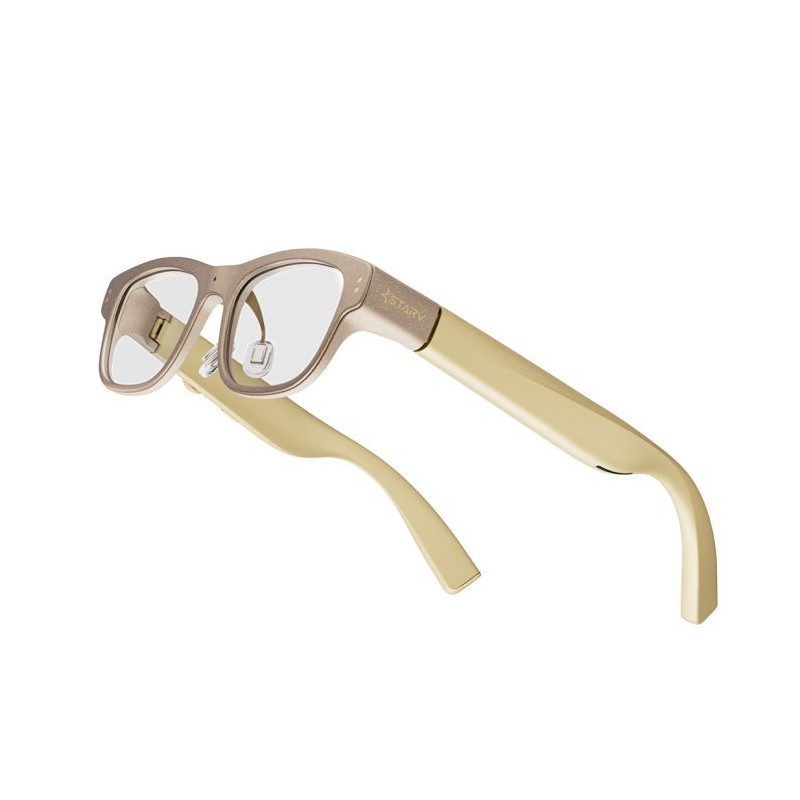
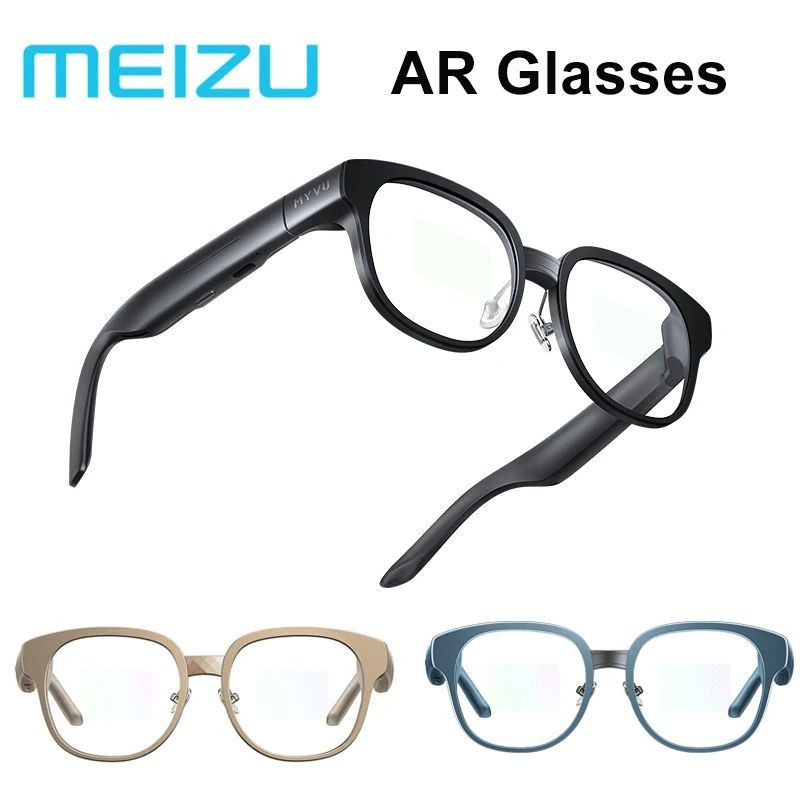
Manufacturer: MEIZU, China.
MEIZU brings its smartphone experience and proprietary software ecosystem into smart glasses.
StarV Air2 weigh approximately 44 g, with a Micro-LED display of 640 × 480 pixels, 30° field of view, maximum brightness of 2000 nits and a 204 mAh battery.
The device uses Flyme XR 2.0.
Functions include translation, displaying presentation scripts, navigation, voice notifications and AI assistant interaction.
MEIZU MYVU is an earlier concept of discreet display glasses using Flyme AR.
MYVU specifications include:
weight approximately 43 g;
binocular Micro-LED display;
claimed 1280 × 480-pixel resolution for the binocular system;
field of view 30°;
brightness up to 2000 nits;
Bluetooth 5.3;
183 mAh battery.
Polish language: official materials do not provide sufficient grounds to confirm full support for Polish in Flyme AR and Flyme XR.
Software: Flyme AR and Flyme XR 2.0, with features and compatibility depending on the model and region.
The manufacturer warns that some StarV Air2 functions may operate outside mainland China with limitations or delays, which matters to European users.
6. AirCaps Smart Glasses – captions and communication across language barriers
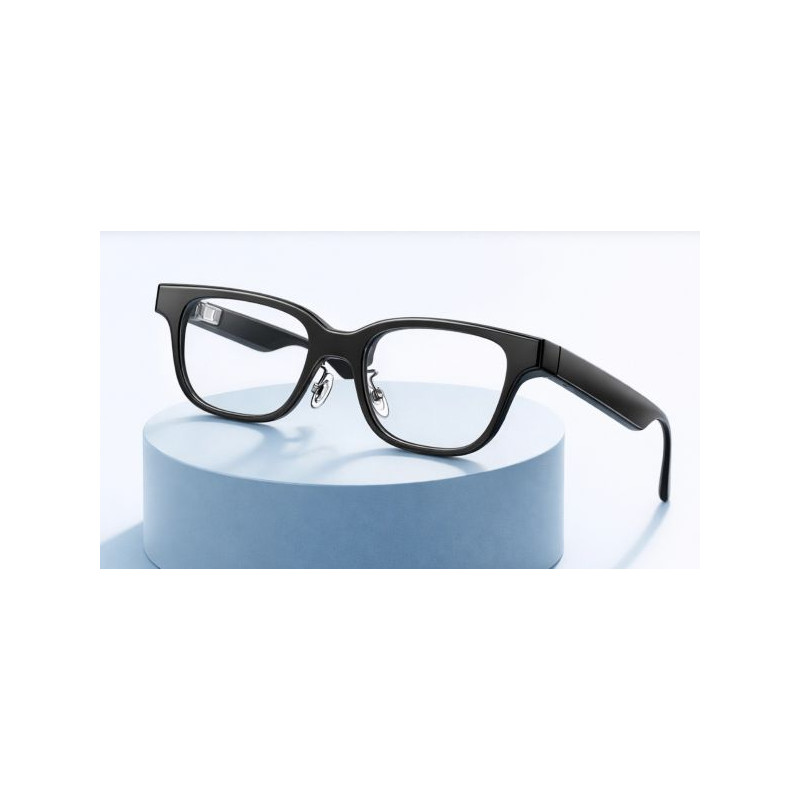
Origin: the AirCaps PBC brand is presented as American, while the hardware platform has links to China. This should not automatically be interpreted as the brand owner's headquarters being in China.
AirCaps focuses on converting speech into captions displayed in the user's field of view.
The glasses can be used in meetings, education, travel, multilingual conversations and situations where speech is difficult to hear.
Selected specifications and capabilities:
weight approximately 49 g;
binocular green text display;
four directional microphones;
conversation transcription;
translation into more than 60 languages;
AI-generated notes and summaries;
compatibility with Android and iOS devices.
Polish language: it is listed among the supported languages. This does not automatically mean that every function has a Polish interface.
Software: AirCaps companion app and AI services supporting transcription and note-taking.
Polish language: it is listed among the supported languages. This does not automatically mean that every function has a Polish interface.
Software: AirCaps companion app and AI services supporting transcription and note-taking.
7. Halliday G2 – artificial intelligence supporting conversations and meetings
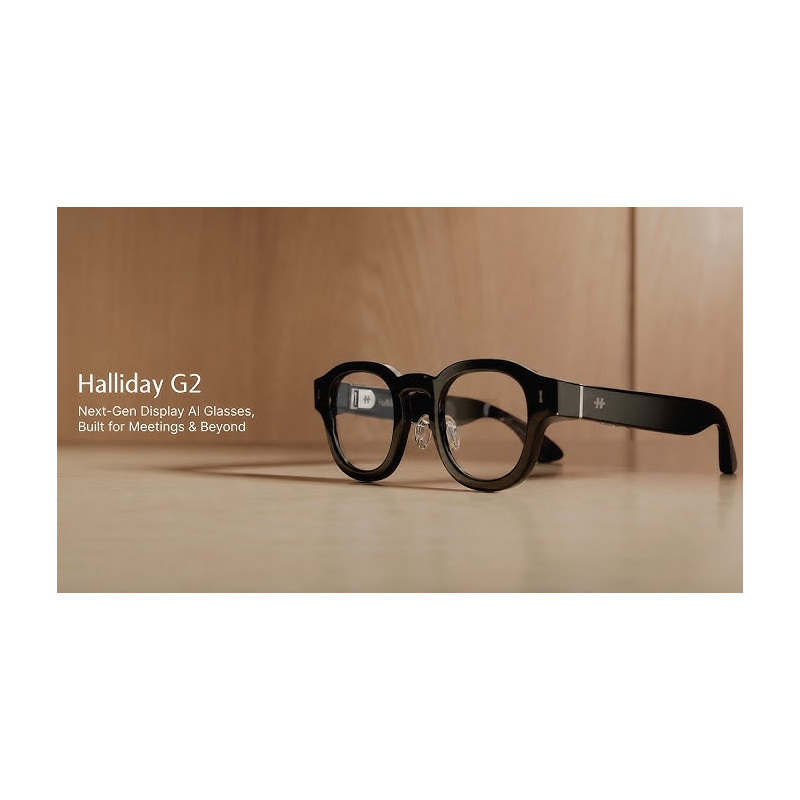
Origin: HALLIDAY GLOBAL LIMITED, a Hong Kong company, is responsible for sales and the website, while HALLIDAY HOLDINGS PTE. LTD. provides application services. This information does not establish the specific factory manufacturing the devices.
Halliday G2 focuses on using artificial intelligence during conversations, presentations and business meetings.
The glasses display information, captions, translations and suggestions, and can create meeting summaries.
Specifications:
weight 49 g;
two Micro-LED displays with optical waveguides;
resolution 600 × 300 pixels per eye;
field of view 25.2°;
brightness up to 1600 nits;
four microphones;
open-ear speakers;
Bluetooth 5.4;
210 mAh battery;
declared up to 12 hours of typical use;
IP54 protection.
Polish language: there is insufficient confirmation of full Polish-language support for all G2 functions. The ability to translate speech must be distinguished from the language of the application interface.
Software: Halliday App, device update system and AI services for meeting support.
8. Neomix AI Glasses – camera, audio and voice assistant
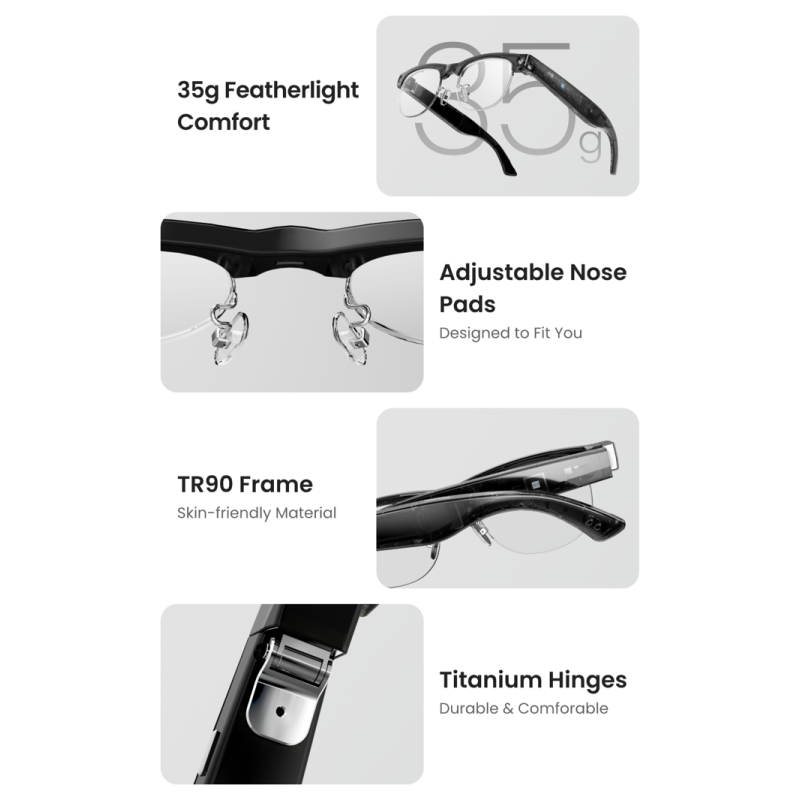
Manufacturer identified in Pronet documentation: Beaver Technology (Shenzhen) Co., Ltd. / Beverlab, China.
Neomix AI Glasses, also known as Neomix A1, represent the category of multimedia smart glasses without an AR display.
Their main uses are taking photos and making recordings, calls, voice commands and AI-based recognition of surroundings.
Selected specifications:
21 MP camera;
video recording up to 2K at 30 fps;
64 GB storage;
three microphones;
Bluetooth 5.4;
Wi-Fi 6;
touch, voice and head-movement controls.
The glasses can play audio through open speakers. They do not display translations in front of the eyes.
Polish language: full support for Polish commands and assistant features has not been confirmed.
Software: Neomix/Beverlab mobile app and AI services; product materials mention the MiniMax model.
9. Solos AirGo V2 Prime – smart glasses for communication and everyday use
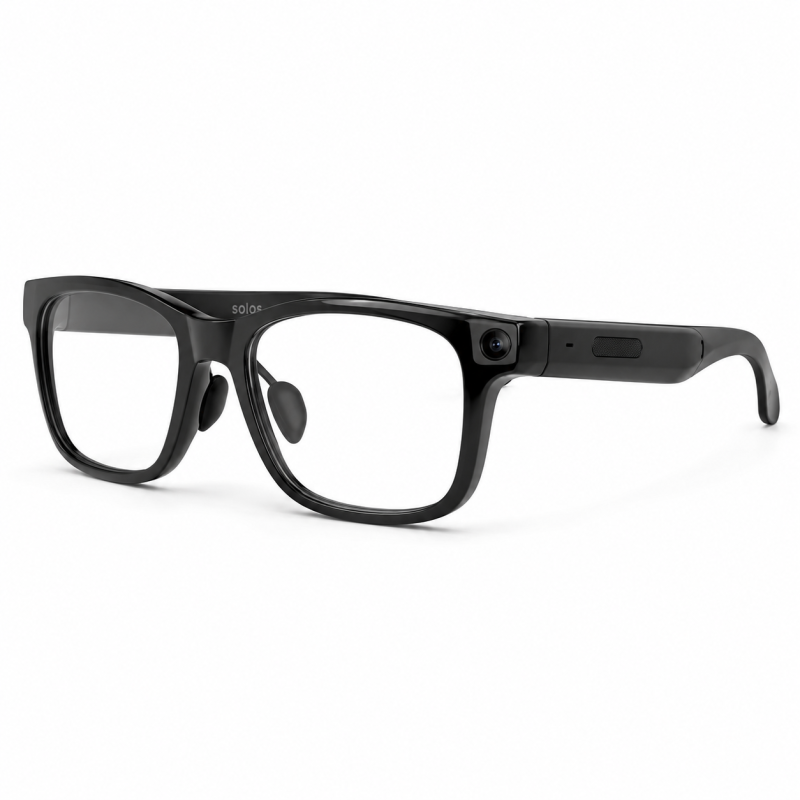
Manufacturer identified in Pronet documentation: Solos Technology Limited, China.
Solos AirGo V2 Prime combines a camera, microphones, open-ear speakers and AI features while retaining an appearance similar to conventional glasses.
Prime versions differ mainly in their frames. These are not AR display glasses.
Users can take photos and videos, listen to music, make calls, use a translator and ask questions of an AI assistant.
Key functions include SolosChat, SolosTranslate and image recognition using the camera.
Polish language: it is supported in selected SolosChat and SolosTranslate functions. Availability of Polish translation in the free plan after the promotional period requires verification.
Software: Solos app, SolosChat and SolosTranslate. Some services may be subject to subscription restrictions.
10. Dymesty – smart audio glasses without a camera
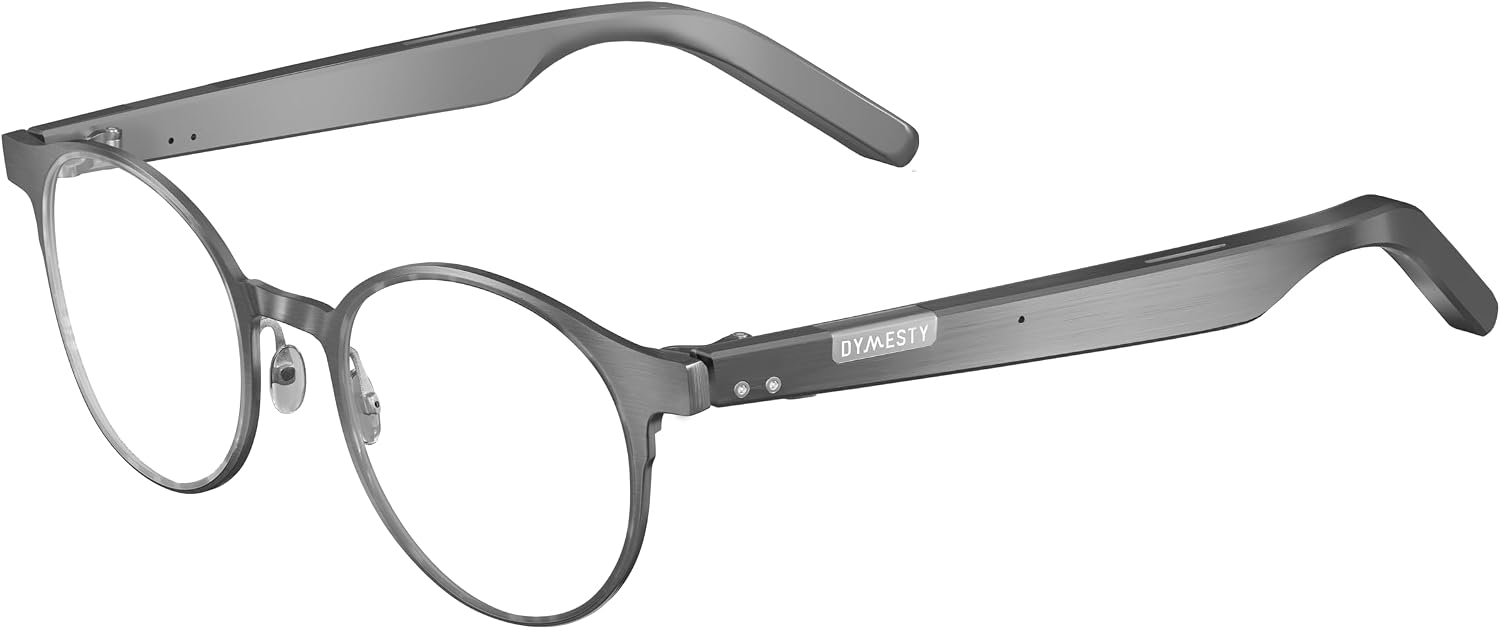
Manufacturer identified in Pronet documentation: GuangDong AllWin Technology Co., Ltd. / Shenzhen WinTech Innovation Technology Ltd., China.
Dymesty develops smart audio glasses for accessing AI services without a camera or display.
The glasses can be used for calls, audio playback, recording meetings, producing transcripts and translating speech.
Available frame variants include Cook Edge, Jobs Circle and Moore Vision.
Selected specifications:
Bluetooth 5.3;
Qualcomm chipset;
four microphones;
two open-ear speakers;
aptX codec support;
IP54 protection;
magnetic charging.
Polish language: the full scope of support for Polish commands and translation has not been confirmed.
Software: Dymesty companion app and services supporting AI functions. This is not a standalone AR platform.
11. MyView Caption Glasses – captions in the field of view
Manufacturer identified in Pronet documentation: Hubei Xingji Meizu Group Co., Ltd., China, associated with the DreamSmart/MEIZU ecosystem.
MyView Caption Glasses focus on supporting communication by converting speech into text displayed before the eyes.
They can help users follow conversations, display translations and present information.
The first generation claimed:
weight approximately 43 g;
binocular Micro-LED display;
resolution 640 × 480 pixels per eye;
brightness up to 2000 nits;
field of view 30°;
transcription and translation in 13 languages.
Applications also include notifications, navigation and a teleprompter.
Polish language: it is not included in the confirmed list of 13 first-generation languages. Other MyView versions require separate verification.
Software: MyView software connected with the manufacturer's ecosystem, a smartphone and speech recognition services.
12. Looktech AI – a personal assistant with a camera
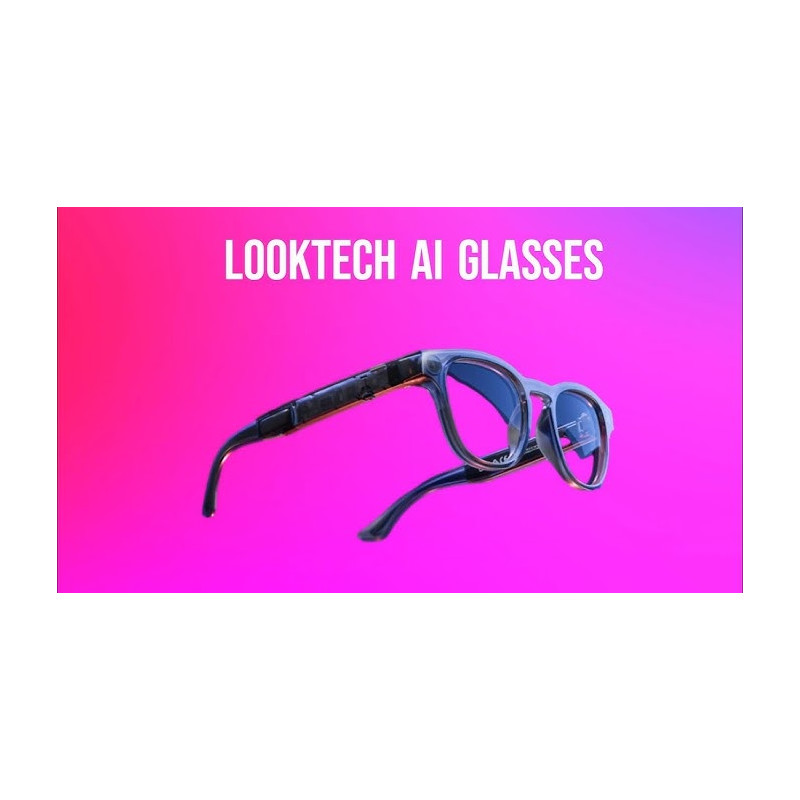
Origin: brand owner Looktech Inc. is identified as a US company, while the hardware manufacturer is Wenzhou Ouhai Glasses Co., Ltd. in China.
Looktech AI Glasses offer a camera, open-ear speakers, microphones and an AI assistant named Memo.
They have no AR display. Users hear voice responses through the speakers, while additional information is presented in the mobile app.
The glasses enable photography, recording, image analysis, creating notes and reminders, transcription and conversation translation.
Software is an important part of the solution, as it can retain interaction context and process information captured by the user.
Polish language: a Polish-language application interface has not been confirmed. Support for certain languages by AI models does not automatically mean all features work in Polish.
Software: Looktech App and Memo assistant. The manufacturer uses a credit system to charge for selected AI features.
13. Rollme NeoView – camera and AI in a conventional frame
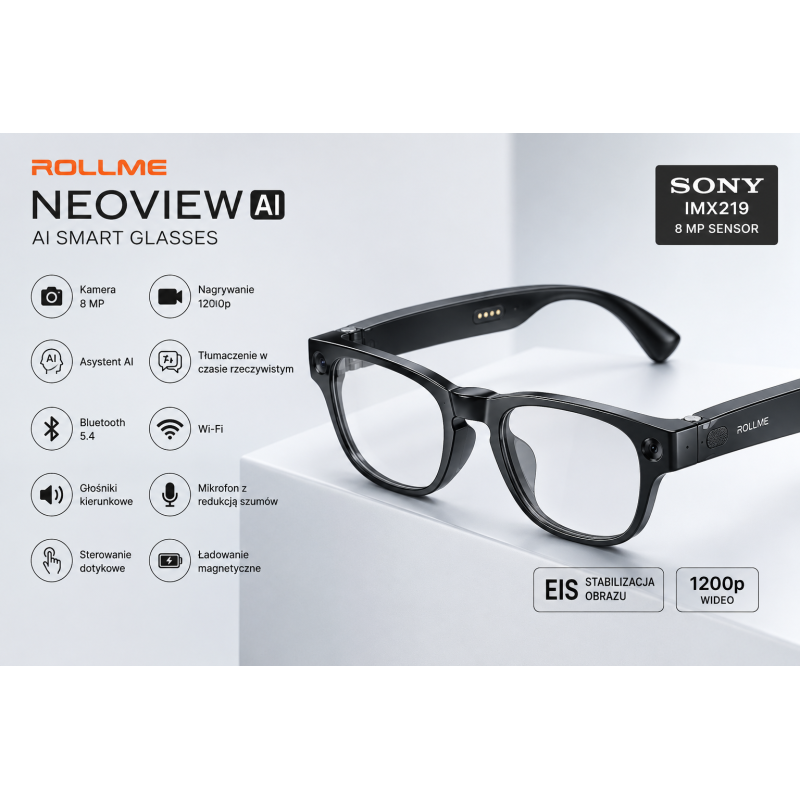
Manufacturer: ROLLME, China.
Rollme NeoView are AI glasses for taking photos, recording short videos, making calls, playing music and using image recognition functions.
Key components:
Sony IMX219 camera with native 8 MP resolution;
video recording described as 1200p;
electronic image stabilization;
noise-reducing microphones;
stereo speakers;
wireless connectivity;
AI functions available through compatible software.
The manufacturer also claims higher-resolution photos produced through software processing. These should not be equated with the sensor's native resolution.
Polish language: there is no clear confirmation of full support for all functions.
Software: smartphone companion app and integrated AI services; detailed compatibility should be checked for the current hardware version.
Do Chinese AI glasses support Polish?
This is one of the most important questions when choosing smart glasses.
Polish-language support can mean several different things:
Displaying Polish letters such as ą, ć, ę, ł, ń, ó, ś, ź and ż.
Recognizing users' speech in Polish.
Translating from Polish into other languages and vice versa.
Polish voice commands.
A Polish-language mobile app interface.
Polish-language features working without internet access.
A device that translates into Polish does not necessarily have Polish menus or recognize all voice commands.
For example, Even G2 and Leion Hey 2 have officially confirmed support for Polish in selected translation functions. For other products, the range of available languages may depend on the software version, user account, service package or market.
It is also worth remembering that even the best AI translation can make mistakes, particularly when several people are speaking, with specialist terminology, strong background noise or unclear pronunciation.
Software is just as important as electronics
Modern AI glasses are increasingly part of a larger ecosystem.
Device functions may be performed by the glasses' processor, an app on a smartphone or servers processing data in the cloud.
This means that before choosing a product, it is worth checking not only the hardware specification but also:
app compatibility with Android and iOS;
availability of software updates;
supported languages;
ability to operate without internet access;
limits on free translation and transcription;
subscriptions for AI features;
how recordings are processed and stored;
availability of documentation and technical support;
options for repair and battery replacement.
Particular attention should be paid to privacy. Glasses with microphones and cameras can process images, voices and the contents of conversations, including those of bystanders. In business applications, GDPR requirements, cloud service providers' terms and meeting-recording policies should be examined.
Will AI glasses replace smartphones?
The coming years may bring further display miniaturization, advances in speech recognition, better energy efficiency and increasingly natural interactions with artificial intelligence.
Glasses can already take over some tasks previously performed on phones: translating conversations, reading notifications, navigation, recording short materials and using an AI assistant.
This does not mean, however, that every model can independently replace a smartphone. Many devices still require a Bluetooth connection, internet access and a mobile app.
The most interesting direction of development is solutions that deliver information at the right moment without requiring users to divert their attention from their surroundings.
Purchasing and technical support for AI glasses in Europe
Rapid market development means a wide variety of devices, but also differences in the availability of individual models in Europe.
Not all glasses featured in manufacturers' international catalogs are available through European distribution channels. Buying directly from abroad may require individual arrangements for shipping, warranty, servicing, software updates and complaints handling.
Product documentation, compliance with European Union regulations and availability of a responsible economic operator, where required, are also important.
The future of AI glasses – a technology worth watching
Smart glasses are among the interesting directions in consumer electronics, artificial intelligence and augmented reality.
INMO, Even Realities, LLVision, Rokid, MEIZU, AirCaps, Halliday, Neomix, Solos, Dymesty, MyView, Looktech and Rollme demonstrate different approaches to the same goal: providing information and AI functions more conveniently than through a traditional screen.
Some devices focus on photography and voice, others on conversation translation, and still others on extensive AR application environments.
Technical information was compiled from manufacturer documentation and available product materials. Parameters, features, language lists and service terms may change with software updates. Where information is unconfirmed, the availability of a particular feature should not be assumed.
20.10.2026